What a new driveway costs in Loyalsock
In Loyalsock, where 72.3% of homes are single-family and 73.3% of residents own their homes (U.S. Census Bureau, ACS 2024), a driveway is one of the largest exterior expenses for most homeowners. Whether restoring a narrow driveway from the 1940–1970 building wave or upgrading to handle modern vehicles, local paving costs reflect much more than what you see on the surface. In our area, with some of Pennsylvania’s harshest freeze-thaw cycles and a shale subgrade that ruts and heaves if not properly prepared, most of what you’re paying for is the work and materials buried under your tires—not just finished asphalt or concrete.
The gap between the low and high end of a quote is almost always explained by what’s happening underground: excavation, proper aggregate base, drainage, and compacting. A visibly fresh topcoat tells you little. The reality is that poorly built bases—hard to verify once covered—are the single largest reason driveways fail early in Loyalsock’s climate. Because aggregate supply is local to Williamsport, surface material costs are relatively stable, but don’t let anyone tell you square footage is the whole story.
| Service |
Best for |
Lifespan |
Price range |
| Asphalt — full replacement with new base |
failed base, structural cracking |
20–30 yrs |
$3,300–$8,600 |
| Asphalt overlay / resurfacing |
sound base, surface cracking only |
8–15 yrs |
$1,450–$4,300 |
| Sealcoating — single application |
preventive maintenance on sound asphalt |
2–4 yrs |
$200–$650 |
| Concrete — new installation |
long service life, low maintenance |
30–50 yrs |
$4,800–$11,500 |
| Crack filling and patching |
isolated cracks under a quarter inch |
1–3 yrs |
$200–$800 |
| Gravel driveway |
rural, budget, long runs |
5–10 yrs with upkeep |
$900–$3,500 |
Estimates for a typical Loyalsock driveway. Square footage and base condition drive these figures more than material choice.
Driveway permits, approaches and stormwater rules
In much of Lycoming County, including Loyalsock, repaving an existing private driveway in its original footprint typically does not require a building permit—saving you both money and a call to the township office. However, if you are installing a new driveway, expanding the width, or changing how the driveway meets the road, things get more complicated. Any connection to a public street or state route often triggers a driveway approach or paving permit, which falls under different authorities than you might expect. For driveways connecting to state-owned roads, you’ll need a Highway Occupancy approach permit from PennDOT District 3, not your local township.
Expanding the impervious surface—for example, by adding width or a parking pad—can put you on the hook for stormwater management requirements. In Loyalsock, even without a formal permit, property owners are still liable if runoff from the new hard surface ends up on a neighbor’s land. Good driveway projects plan water management from the start, both to keep your surface dry and out of trouble with local authorities.
When hiring a contractor, Pennsylvania law requires HIC registration (verify via hic.attorneygeneral.gov) and all employers must carry workers’ compensation insurance, which can be checked through WCAIS (wcais.pa.gov). Don’t skip these steps—proper documentation protects you if there’s an injury or dispute on site.
How to vet a paving contractor in Loyalsock
Checking a paving contractor here in Loyalsock means more than seeing if their phone answers. Pennsylvania’s Home Improvement Contractor (HIC) law requires any contractor taking on a driveway job over $500 to register with the Office of Attorney General (verify at hic.attorneygeneral.gov). For your own protection, also verify their active workers’ compensation insurance through WCAIS (wcais.pa.gov), especially since driveway work brings multiple crew members and machinery onto your property.
Insist on more than a cell phone and a first name. Look for crews with a physical business address, not just a pick-up with magnetic signs. In Lycoming County, a contractor who can’t tell you which Williamsport-area asphalt plant or aggregate quarry they buy from likely isn’t local or reputable. Driveways here last or fail based on prep, and a real operator owns their own equipment and stands by work done years ago—not just this summer. References from jobs at least three years old are the only ones worth anything, since newer surfaces hide shortcuts.
- Current HIC registration (hic.attorneygeneral.gov)
- Active workers’ comp verified on WCAIS
- Physical business address in the county
- Owned—not constantly rented—equipment
- Detailed, written contract (not just a verbal quote)
- References from at least three-year-old driveways
- Able to name their asphalt supplier and quarry
- Line-item quote for excavation, base, and surface
- Evidence of recent jobs in Lycoming County
- No demand for cash payment up front
- Proof of insurance, not just a certificate copy
- Contract with exact paving specs—depths, materials, mix—listed
Red flags: an unmarked truck, no verifiable address, pressure for immediate decision, or claims they "just finished a job nearby" and can offer a deal with surplus material. In a thin contractor market, these are reason to walk away.
Sealcoating: what it does and what it doesn't
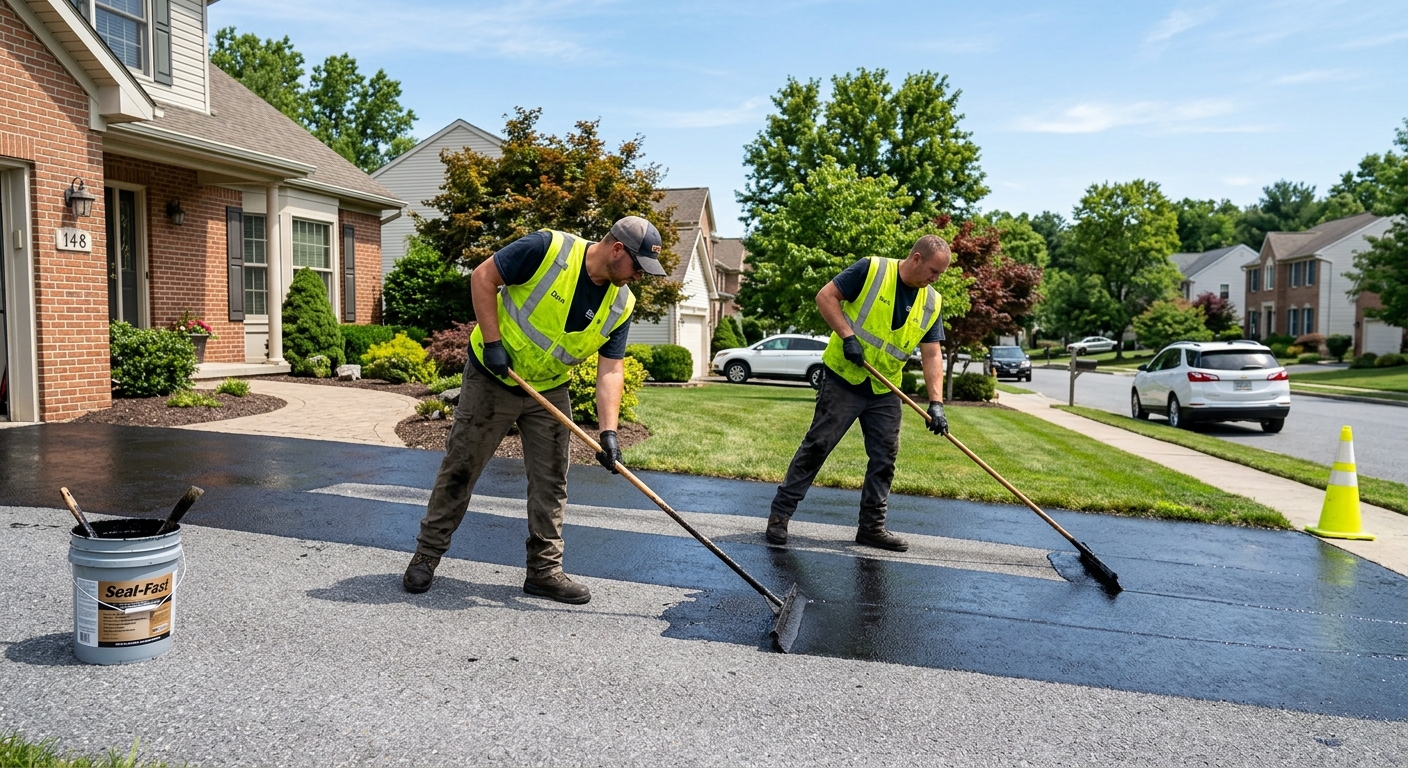
Sealcoating is widely promoted in Loyalsock as routine driveway maintenance, and when the work is done correctly and at the right interval, there's value to it. Sealers protect the asphalt's binder from oxidation caused by sun and weather, and from softening by car fluids like oil or gas. A fresh sealcoat also gives a uniform look to a patchy surface, which many homeowners appreciate for curb appeal.
What it does not do is add any real structural strength or rescue a failing driveway, especially when major cracks, rutting, or base failure are present underneath. Sealcoating cannot "save" a driveway that really needs resurfacing or a new base. Overdoing it—especially annual sealing—leads to brittle, layered coats that crack, peel, and sometimes make the surface slick. On newly paved asphalt, sealing before the mat has properly cured can actually trap solvents inside and reduce the life of the driveway.
The more important—and less marketed—maintenance is proper crack filling. Water entering even hairline cracks will exploit Loyalsock’s freeze-thaw cycles, turning cracks into potholes by spring. A quality crack fill (hot-pour, routed out first, not just brushed over with cold patch) does more to extend the pavement’s life than sealcoating ever will.
A proper one-time sealcoat in Loyalsock runs $200–$650. Extremely cheap offers ($100–$150 for a large job) almost always mean someone with diluted product spraying a thin layer from a pickup tank. That’s all for looks, and it typically doesn't last a winter here.
Changing the footprint of a Loyalsock driveway
Loyalsock’s many older homes often have driveways designed for narrow cars and lighter traffic than today. Widening for a second vehicle, adding a turnaround, extending a driveway to a detached garage, or paving over an old gravel run are common upgrade projects. These go well beyond resurfacing—a new footprint means fresh excavation through the shale subgrade, new aggregate base, and careful drainage planning.
Any time you extend past the existing paved area, you’re working with undisturbed ground that will need a deeper, well-compacted base to hold up against rutting and frost heave, especially given the local soil and the region’s harsh winters. The joint between old and new is always a weak point and can be prone to cracking. Your project may come under impervious-surface regulations, especially if it affects stormwater runoff.
Approach and stormwater permits are a part of this work. If the new section ties into a public or state road, you’re likely dealing with a PennDOT District 3 Highway Occupancy permit for the approach. Before you commit, check these requirements to avoid fines or a forced tear-out.
What to put in a Loyalsock paving contract
In Loyalsock, the quality and longevity of a driveway hinge on the details buried in your contract, not just the final bid. Here, the shale subgrade and aggressive freeze-thaw cycles wreck thin or poorly compacted installations—what holds up in milder states absolutely doesn’t work here. Insist that every quote specifies excavation and base work in writing, down to inches. Don’t accept verbal promises about “three inches of blacktop” unless it’s clear whether that's measured before or after compaction.
Require compaction in lifts, with base aggregate and asphalt each installed and rolled separately. Demand depth as “compacted,” since uncompacted asphalt can compress by a full inch or more after rolling. The specific mix (by designation, not just “asphalt”) and edge treatment are non-negotiable. Ask about drainage: how will water run off, and is there a plan to correct low spots? Insist on a named plant or supplier, tying the job back to Williamsport’s quarry network.
- Excavation depth (inches below finished grade)
- Aggregate base type (e.g., 2A modified) and compacted depth
- Base installed and compacted in lifts
- Binder course (asphalt) thickness as compacted
- Surface/top course thickness as compacted
- Exact asphalt mix specification (ID, plant)
- Compaction method (roller size, passes)
- Edge treatment (tapered, formed, or shouldered)
- Drainage corrections (where water goes)
- Start and finish dates
A contract with line-item specs is your only real defense—see every number in writing before work starts. Remember, “three inches” means little if that measurement is before rolling, or if half of it is loose gravel that will settle and crack by spring.
Door-knocking crews and leftover material
Loyalsock and wider Lycoming County, with its thin rural contractor market, attract more than a fair share of transient paving operators—especially when summer comes. These crews rely on being visible from the road and know that most defects won’t appear until after a few winters. The most common pitch here involves “leftover material from a job down the road,” coupled with a today-only discount and a demand for a fast decision. The truck is usually unmarked or carries out-of-area plates, and requests cash or up-front payment. The scope of work and any guarantee are verbal, not written, and sealing is offered as a “special” for a price only good if you sign immediately.
Oil-based spray sealers often get sold as sealcoating; these wear off with the first plow and provide only a cosmetic fix. Outside Williamsport, where neighbors are further apart and local authorities are less likely to catch itinerant crews quickly, homeowners become easy targets. Pennsylvania’s Home Improvement Consumer Protection Act (HICPA) is designed to protect you from these tactics: you are entitled to a written contract on any paving job over $500, a full disclosure of your three-day right to cancel, and zero tolerance for any offer to waive your homeowner’s insurance deductible (which is illegal under the statute).
Five minutes of checking will defeat every one of these scams: verify HIC registration at hic.attorneygeneral.gov, call their business address (not just a cell), check workers’ comp via WCAIS, and demand a written, signed contract. If they hesitate at any of these, close the door.
Frequently asked questions — driveway paving in Loyalsock
Is an overlay worth it or should I start over?
In Loyalsock, whether an asphalt overlay is worthwhile comes down to the condition of the base underneath. If your existing driveway has only surface-level cracks but the base is still stable—no settling, rutting, or major “alligator” cracks—then an overlay at $1,450–$4,300 is sensible. It gives you 8–15 more years. But if the surface feels soft, has deep cracks, or puddles form after rain, that usually means the stone base or subgrade (often shale in our area) has failed from freeze-thaw or wear. In those cases, a full replacement is the only money well spent, because an overlay will fail in a few seasons. Have a contractor dig a test pit to see the real condition below—the fix you pick should match what’s actually under your tires, not just what looks good at the surface.
How many freeze-thaw cycles does Loyalsock get?
Loyalsock endures a long heating season and some of Pennsylvania’s roughest freeze-thaw cycling, thanks to its north-central location. While the exact number of cycles varies year-to-year, expect dozens of transitions each winter. This cycling is tough on driveways because water works into cracks and expands when frozen, heaving and breaking apart both asphalt and base if they aren’t well built. That’s why thicker aggregate bases and proper drainage matter so much here—what might make it through in a milder Pennsylvania region won’t last in Loyalsock. When budgeting paving work here, it’s worth paying for base depth and compaction instead of skimping just to get the low end of the “Asphalt — full replacement” range ($3,300–$8,600).
Is sealcoating a scam?
In Loyalsock, sealcoating is sometimes oversold but not a scam when used properly. On a stable, well-built driveway, a sealcoat every few years—at $200–$650 per application—protects the surface from oxidation and fluid stains, improving looks and slowing weathering. But it can’t fix cracks or prop up a base that’s already failing. The true scams are crews offering one-day spray jobs for dirt cheap, especially without first patching or filling cracks. Legitimate sealcoating isn’t annual or rushed: seal it when the surface wears dull, and demand proper prep—cleaning, edge masking, and crack filling before the sealant goes down. Never let a contractor convince you sealcoating will “extend life” on a crumbling driveway; it only works as preventive maintenance, not a cure.
Do I need a permit to repave a driveway in Loyalsock?
For most Loyalsock Township homeowners, resurfacing or repaving a driveway in its same footprint generally doesn’t require a building permit, which is a relief when you’re trying to keep your project straightforward. However, if you expand the width, add a second lane, change your driveway’s access point, or connect to a public street or a state route, a paving or driveway approach permit may be required—often from PennDOT District 3, not just the township. Regardless of permits, always confirm your contractor’s HIC registration (check hic.attorneygeneral.gov) and workers’ compensation coverage. For a typical repaving (asphalt overlay) in Loyalsock, expect $1,450–$4,300.
How long should an asphalt driveway last in Loyalsock?
Here in Loyalsock, with long winters and heavy freeze-thaw cycles, a properly built asphalt driveway can realistically last 20–30 years—even with high snow loads and frequent plowing. The key is the base: thick, well-compacted aggregate laid over the local shale subgrade is what prevents rutting and heaving. Cheap jobs or overlays on a bad base may only get you 8–10 years. With routine maintenance like crack filling and occasional sealcoating ($200–$650), you can get reasonably close to the upper end of local lifespans. Still, watch for heavy plow blades and keep water off the surface to get the most years from your investment.
What does an asphalt overlay cost in Loyalsock?
The typical price to overlay or resurface an asphalt driveway in Loyalsock runs from $1,450–$4,300, with most jobs landing near the middle of that range. The wide spread is because costs hinge on square footage, the state of the existing base, and whether any patching or edge repair is needed before the overlay goes down. If you only want to deal with surface cracks over a still-solid base, overlay is cost-effective. But if you’re seeing bigger issues—soft spots, surface movement, or “alligatored” cracks—the extra money for base repair or full replacement ($3,300–$8,600) is well spent. Never pay for an overlay if a contractor can’t prove the base underneath is sound.
How long before I can drive on a new asphalt driveway?
After your new asphalt driveway is installed in Loyalsock’s climate, you should usually wait a minimum of 24 to 48 hours before allowing foot traffic—and ideally 3 to 7 days before driving vehicles on it. In summer, when temperatures are higher, asphalt cures more slowly; cooler days mean a faster set. If you turn too soon, especially heavy trucks or tight steering, the surface can rut, scuff, or absorb permanent tire marks. For the first month, avoid parking in the same spot repeatedly and keep sharp or heavy objects (trailers, motorcycle stands) off the surface. This little patience—after a new installation typically priced between $3,300–$8,600—prevents early damage that no amount of sealcoating can hide.
How deep should the aggregate base be here?
For Loyalsock and similar parts of Lycoming County, the shale-rich subgrade and rough winters demand a thicker base than mild regions. A residential asphalt driveway should have at least 6 to 8 inches of compacted, well-drained aggregate (like 2A modified stone) beneath the asphalt. For high-traffic or heavier vehicles, 10 inches isn’t overkill. This foundation keeps the driveway from settling and resists heaving during freeze-thaw cycles. Skimping here is the fastest way to land in the lower end of the replacement range ($3,300–$8,600) in just a few years. Make sure your contract spells out base depth “after compaction,” and be there to see it go down if you can.
How much does a concrete driveway cost in Loyalsock?
A new concrete driveway in Loyalsock costs between $4,800–$11,500, with the average job coming in around $7,600. This range depends on driveway size, site prep, and add-ons like decorative finishes, which always cost extra. Concrete is expensive up front but can last 30–50 years here—twice the average of asphalt, provided it gets a proper subbase and is jointed against cracking. Be sure your bid includes curing methods and control joints, because local freeze-thaw is punishing on poorly detailed concrete. For many older homes (built pre-1980), updating to concrete may also require removing or regrading compacted shale subgrade, which adds to cost but is worth it for a truly durable finished surface.