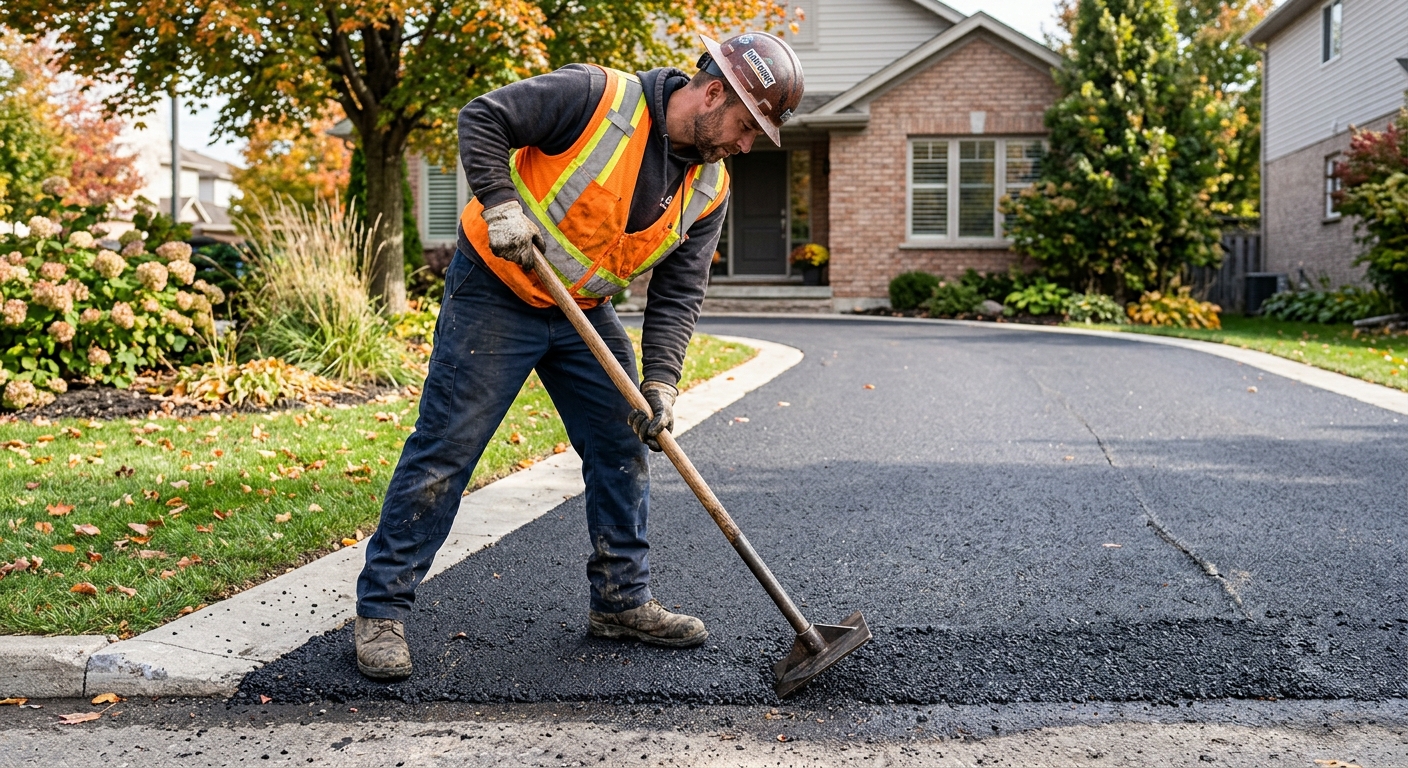
What a new driveway costs in Stroudsburg
In Stroudsburg, where only 35.1% of homes are single-family and the homeownership rate is 44.5% (U.S. Census Bureau, ACS 2024), driveway paving projects are mostly for detached homes and owner-occupied properties. The up-front cost can look like a simple line item, but almost every price difference between two contractors in this region traces back to what they do beneath the surface—subgrade excavation, base depth, and drainage. Labor and material costs can’t hide; but how thoroughly the crew rebuilds (or skimps on) the gravel base absolutely can, and it determines whether your investment survives our severe freeze-thaw cycles.
Local freeze-thaw cycles, plus rocky and glacial till soils (especially near Coolbaugh Township), demand thicker foundation layers than you would see in warmer or sandier regions. Opting for the cheapest quote often means inadequate base work where you cannot see it, setting you up for heaving, cracks, and water damage in just a few years. Quality installation—especially on longer, rural driveways reaching their first major maintenance age—protects your property and avoids unsafe or unsightly failures that can be costly to fix.
| Service |
Best for |
Lifespan |
Price range |
| Asphalt — full replacement with new base |
failed base, structural cracking |
20–30 yrs |
$3,300–$8,600 |
| Asphalt overlay / resurfacing |
sound base, surface cracking only |
8–15 yrs |
$1,450–$4,300 |
| Sealcoating — single application |
preventive maintenance on sound asphalt |
2–4 yrs |
$200–$650 |
| Concrete — new installation |
long service life, low maintenance |
30–50 yrs |
$4,800–$11,500 |
| Crack filling and patching |
isolated cracks under a quarter inch |
1–3 yrs |
$200–$800 |
| Gravel driveway |
rural, budget, long runs |
5–10 yrs with upkeep |
$900–$3,500 |
Estimates for a typical Stroudsburg driveway. Square footage and base condition drive these figures more than material choice.
Drainage: the failure nobody plans for
Every failed driveway in Stroudsburg I have seen had one thing in common: water. Less than a 2% slope is enough for surface runoff but is often ignored to “level” the drive, which is a shortcut to ponding, heaving, and base failure. A properly graded driveway either crowns in the center to shed water to both sides, or is cross-sloped to move water safely away—but never toward the garage or house.
When correcting grade isn’t possible, trench drains or channel drains can help divert water before it sits. Ideally, surface water should “daylight” (discharge above ground) downhill from the home, but if that’s not possible, a dry well is a backup—though it only works as well as the surrounding soil allows. In Monroe County, the rocky and sometimes clay-laden soils near the Pocono Plateau complicate drainage and make base prep even more critical.
Freeze-thaw cycles are brutal here: any water caught below the asphalt or concrete base expands as it freezes, lifts the slab or pavement, and creates cracks or depressions. That’s why site grading and drainage aren’t finishing touches—they are the foundation of longevity. And regardless of what Stroudsburg Borough or the local township allows, you can’t divert runoff onto a neighbor’s property without risking a complaint or even a lawsuit. Good drainage is about protecting your home and staying on decent terms with the neighbors.
Permits and approvals for paving in Stroudsburg
If you are repaving an existing driveway in Stroudsburg without changing the size or location, you can usually skip a building permit—saving you paperwork and fees. But if you are replacing, widening, or building new, Stroudsburg Borough (and every other Monroe County township) requires a zoning or building permit review for driveway work that increases paved area or changes access. This especially comes into play with subdivisions built after 1990, where space is tighter and property lines matter.
What most homeowners miss is the driveway approach permit. Where your driveway meets a public road—especially busy corridors like PA Route 611—permits are issued by PennDOT District 5, not the borough. That process ensures safety setbacks, correct sight lines, and that stormwater won’t be dumped into the public right-of-way.
Adding impervious surface can also trigger stormwater requirements, especially in neighborhoods where runoff management is enforced. Regardless of the permit, intentionally directing water onto your neighbor’s yard creates a liability risk. Before you sign any contract over $500, check that the contractor holds a Pennsylvania Home Improvement Contractor (HIC) registration at hic.attorneygeneral.gov and has workers’ compensation insurance, verifiable with WCAIS. Protect yourself by making these verifications a non-negotiable step.
Base preparation: the part you pay for and never see
In Stroudsburg, the longevity of your driveway is set before the first truckload of asphalt or concrete arrives. The assembly starts with the subgrade: the existing soil, often glacial till or rocky fill, especially on the Pocono Plateau. This layer is cleared of organic debris and compacted. On top of the subgrade, a compacted aggregate base—typically 4 to 8 inches of clean, angular stone—is installed. Asphalt goes last, usually 2 to 3 inches thick, but it’s nothing without the right base below.
Why is this such a big deal here? Our climate punishes shortcuts. When water gets beneath the pavement and freezes, it expands—the freeze-thaw cycle forces the whole slab up and cracks it, quickly turning small imperfections into costly structural failures. Heavy, slow-draining soils hold water even longer, literally pushing the driveway apart from below. That’s why Monroe County driveways need deeper, well-drained bases than you’d see in places with a gentler climate.
Here’s where cheap gets cheap: rushing excavation, skipping base corrections, using a thin or poorly compacted gravel base, or failing to compact in layers (“lifts”) all save time but show up as sunken or shattered pavement in a few seasons. Demand these in writing before you sign:
- Base depth: no less than 6 inches of compacted aggregate for most Stroudsburg sites—more in wet or unstable soils.
- Aggregate: 2A modified stone or approved equivalent, not construction fill or screened dirt.
- Compaction: performed in lifts—one layer at a time—to ensure density through the full depth.
If a contractor can’t commit to those specifics, keep shopping.
Widening, extending or adding a parking pad
Projects that go beyond straight replacement—like widening your driveway, adding a parking pad for guests, or extending the drive down to a new outbuilding—bring their own set of requirements in Stroudsburg and the rest of Monroe County. Any new pavement footprint means new excavation and base over undisturbed ground. This new section and the old often meet at a visible seam, which stays a permanent weak spot for settlement and cracking.
Expanding your paved area can quickly bring impervious surface limits or stormwater management rules into play, especially if the new pavement encroaches on setback zones or pushes you past coverage maximums set by municipal code. You will need a zoning or building permit from Stroudsburg Borough for driveway enlargement, and the approach still requires PennDOT approval if you are accessing a state road like Route 611.
Before starting, check if there are rules on setbacks from property lines—you don’t want to be forced to tear out new work. And whenever you add to the footprint, budget for a proper new base; shortcutting here is a guaranteed invitation for future failures at the seam or at the new/old transition.
Why you can't pave in February
In Stroudsburg, paving is strictly a warm-season job. Hot-mix asphalt must be laid at temperatures usually above 50°F—otherwise, it cools too quickly to compact tightly, leaving gaps and air pockets that collect water and speed up deterioration. Our local asphalt plants close for winter, making the material itself unavailable from late November through March. It’s not a matter of preference: even if you could get the mix, subzero surface temps would doom the job on day one.
Concrete, too, needs above-freezing conditions to cure properly. The region’s winter design temperature is just 4 °F, so during the freeze, there is no margin for “rushing it in before snow.” Severe ice and heavy snow load in the Poconos only underscore why this schedule matters.
Shoulder months—April, May, September, and October—see lower demand and more scheduling flexibility. Summer is peak season and books fast. If anyone offers to pave your Stroudsburg driveway in late November or February, that is a contractor ignoring basic standards. Materials, equipment, and the finished product all suffer in the cold, with expensive consequences. Wait for the season, even if it means a longer lead time.
Getting thirty years out of a driveway
Longevity for driveways in Stroudsburg comes down to maintenance more than luck. The first and easiest step is regular crack filling. Small cracks, left unsealed, let water down to the base where freeze-thaw cycles do real damage. Next: keep the edges supported—erosion grinds away at the vulnerable sides, starting failures you won’t notice until the center follows.
Water is the enemy, so maintain good flow away from the pavement with functioning gutters and careful landscaping. Heavy, stationary loads such as parked dumpsters or trailers concentrate stress and cut years off the surface. For new asphalt, follow the crew’s instructions: keep vehicles off for at least three days, avoid turning steering wheels while stopped, and let the driveway fully cure.
De-icing matters here with 6,100 heating degree days a winter—rock salt attacks concrete chemically, while on asphalt, the main concern is not chemical but mechanical: cycles of melting and refreezing hasten edge and surface damage. Safer but pricier alternatives include calcium magnesium acetate or potassium chloride. Know that a little planning will add decades to your Stroudsburg driveway, at much lower cost than a replacement.
Frequently asked questions — driveway paving in Stroudsburg
What does sealcoating cost in Stroudsburg?
Sealcoating in Stroudsburg costs between $200–$650 per single application, with most average-sized drives coming in near the $375 mark. Sealcoating is preventive maintenance—it refreshes the look, but more importantly, it helps slow down oxidation and blocks out water and minor chemical spills. Product quality, driveway size, and the extent of prep (such as cleaning and minor crack filling) account for most of the cost variation. In Stroudsburg, where freeze-thaw cycles and seasonal plowing can accelerate wear, sealcoating is a sensible investment if the base structure is still good. For driveways on the edge of needing full resurfacing, sealcoating is probably not worth it—it's not a permanent fix for structural problems.
What is the difference between crack filling and sealcoating?
In Stroudsburg and across Monroe County, crack filling and sealcoating are two different kinds of driveway maintenance—each addresses different problems. Crack filling is targeted: it means injecting a flexible sealant into specific cracks wider than a hairline but less than a quarter inch, to keep water out of the base where freezing might expand and destroy the pavement from below. Most crack filling jobs cost between $200–$800. Sealcoating, on the other hand, is a liquid treatment spread across the entire surface, usually for prevention and improved appearance. Done together on an asphalt driveway, they can extend life, but neither repairs deep damage. Routinely relying on sealcoat to fill cracks is a mistake; Stroudsburg's climate is unforgiving, and water that gets through any gap will cause real trouble.
When is the best time of year to pave in Stroudsburg?
The sweet spot for paving in Stroudsburg is from late April through October, when both temperatures and asphalt plants favor good work. Anything outside the target range can spell trouble—hot mix needs air and ground temps above 50°F, or you risk cold seams and poor compaction. Local asphalt plants shut down for the winter, and concrete requires above-freezing conditions to cure strong. This timing is not negotiable: our winter design temperature drops to 4°F, and heavy snow loads are common. In shoulder months like May and September, contractors have more capacity and prices aren’t inflated by summer demand. If you receive a bid to pave in early spring or late fall, ask serious questions—they may be cutting corners. Typical installation costs for asphalt range from $3,300–$8,600.
How much does a concrete driveway cost in Stroudsburg?
In Stroudsburg and Monroe County, a concrete driveway installation typically runs between $4,800–$11,500, with a median job near $7,600. The wide price range comes from your square footage, how much grading is needed, site access, and the thickness of both base and slab. Concrete is more expensive than asphalt, but the trade-off is service life: a well-installed slab here should last 30–50 years, considerably outlasting most blacktop in our freeze-thaw cycles. Price quotes also reflect base preparation needs—rocky or unstable soil, like you’ll find in Coolbaugh Township, may require a thicker and more expensive base, driving costs to the upper end of the range.
How many freeze-thaw cycles does Stroudsburg get?
Stroudsburg gets a severe number of freeze-thaw cycles every winter—well into the dozens, thanks to our climate’s average of 6,100 heating degree days per year. Every cycle gives water a chance to creep into small cracks, freeze, expand, and start the process of breaking the surface from below. That’s why local code puts frost depth at 36 inches, and it’s the main reason driveways here, especially older ones, often show heaving or new cracks in spring. This climate pushes asphalt and concrete to their limits; short-cutting on base or skipping regular maintenance—like crack filling for $200–$800—will cost you more in the long run. Choosing the right base and managing drainage are absolutely non-negotiable.
How deep should the aggregate base be here?
In Stroudsburg and the surrounding Monroe County region, a durable driveway starts with a compacted aggregate base of at least 6 inches for asphalt—more in wet or unstable terrain, like some of the glacial till near Coolbaugh Township. Concrete driveways often call for a similar or slightly thicker base. The base distributes weight and keeps the pavement stable during deep freezes, when our 36-inch frost depth and abundant freeze-thaw cycles put extra strain on the assembly. Skimping here to save a few dollars is false economy. On long, rural drives, or on sites with poor drainage, you might see base quotes on the higher end and more labor, but it’s what separates a 3-year repair job from a 20–30 year investment ($3,300–$8,600 for asphalt replacement).
Why does my driveway have depressions that hold water?
Depressions, or birdbaths, in Stroudsburg driveways are almost always the result of water trapped in or under the pavement. This usually signals a compromised base—either from poor compaction during installation or from water infiltration during our intense freeze-thaw cycles. Over time, as water gets into weak spots and freezes, it expands and pushes the asphalt up or settles it down unevenly when it thaws. Sometimes, repeated traffic over a poorly supported area will compact the soil further, making the dip worse. Quick patching may fix the appearance, but if you’re seeing frequent puddles, it could be time for a proper repair or even a partial rebuild. A localized patch is in the $200–$800 range, but widespread dips likely mean replacement.
Should I repair or replace my Stroudsburg driveway?
In Stroudsburg, the decision to repair or replace comes down to the base. If surface cracks or potholes are isolated and the base is still solid—no flexing or widespread sinking—a resurfacing or targeted patching can buy you another 5–10 years, often for $1,450–$4,300 (asphalt overlay). However, if your driveway shows widespread cracking, rutting, or sinking, these are signs of a failed base from years of freeze-thaw cycles. At that stage, repairs are just putting off the inevitable, and a full replacement ($3,300–$8,600) is the wiser long-term investment. Have an experienced local contractor get to the root of the issue—otherwise, smaller repairs will likely not last.
Are there stormwater rules on paving in Stroudsburg?
Yes, there are. In Stroudsburg Borough and most Monroe County municipalities, expanding or altering your driveway can trigger a zoning or building permit review, and making new surfaces impervious often comes with stormwater management requirements. The goal is to keep your runoff from overwhelming public systems or flooding neighbors. Even when permits are in order, you are liable for any water your driveway redirects onto a neighbor’s property—local code won’t protect you against civil complaints if water causes damage. For major projects, you may need design features like a channel drain or even a dry well, especially if your new pavement increases total runoff. This is another reason why doing the job correctly the first time is worth it, even if it means spending $4,800–$11,500 on a new concrete driveway or adding professional drainage solutions on an asphalt job.