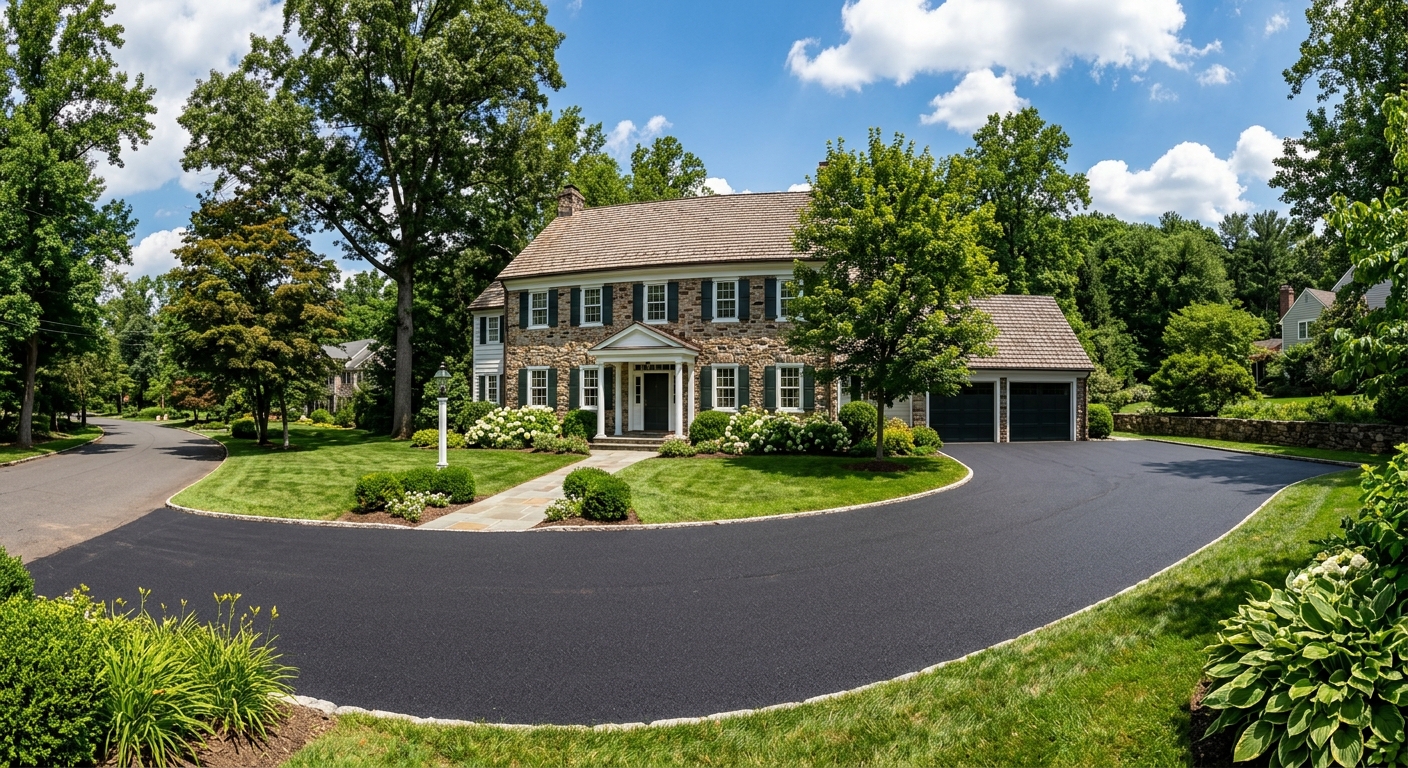
What a new driveway costs in Windsor
Windsor’s homeowners face driveway costs tied directly to the realities of detached homes—here, 78.6% of the housing stock is single-family and homeownership sits at 86.2% (U.S. Census Bureau, ACS 2024). That means most driveways are the private responsibility of the resident, not shared or managed by any association. Add in York County’s pronounced freeze-thaw cycles and the shale subgrade beneath Windsor properties: both raise the stakes for a driveway’s foundation. Most price differences between quotes come from what you cannot see—the excavation, base correction, and drainage—rather than the visible surface material. Some companies cut the sub-base or skip essential drainage steps to underbid, but that savings washes away when sections fail after a few winters. The material—be it asphalt, concrete, or gravel—is only as good as what lies below. That’s why a ‘deal’ that skips proper base work in this part of York County is no deal at all.
| Service |
Best for |
Lifespan |
Price range |
| Asphalt — full replacement with new base |
failed base, structural cracking |
20–30 yrs |
$3,700–$9,500 |
| Asphalt overlay / resurfacing |
sound base, surface cracking only |
8–15 yrs |
$1,600–$4,700 |
| Sealcoating — single application |
preventive maintenance on sound asphalt |
2–4 yrs |
$200–$750 |
| Concrete — new installation |
long service life, low maintenance |
30–50 yrs |
$5,300–$12,500 |
| Crack filling and patching |
isolated cracks under a quarter inch |
1–3 yrs |
$200–$800 |
| Gravel driveway |
rural, budget, long runs |
5–10 yrs with upkeep |
$900–$3,500 |
Estimates for a typical Windsor driveway. Square footage and base condition drive these figures more than material choice.
Grading and water management on a Windsor driveway
In Windsor, driveway longevity isn’t just about picking the right surface—what matters most is how you handle water. Every major driveway problem in York County, from frost heaves to base washout, is water-driven. Minimum slope is crucial: you want at least a 2% grade (about a quarter inch per foot) to shed water. For wider driveways, crowning the center or pitching to one side prevents ponding in the middle. If your driveway slopes toward your garage or house, you are at near-certain risk for pooling, water entry, and base failure. Where you can’t correct slope—maybe due to property grade or setbacks—channel or trench drains at the low end grab the runoff before it causes trouble. Ideally, water should daylight (flow out to a low point on your own property), but dry wells are an option where you can’t get enough slope.
Because Windsor sits on shale, drainage mistakes cost extra: this subgrade doesn’t wick away water like gravel. Water that gets trapped against—or beneath—the base soaks in and, come winter, freezes and expands. That’s why ponded areas cause a driveway to heave and break up with every cold snap. Redirecting runoff onto a neighbor, regardless of what the township says about your permit, puts you in the crosshairs for nuisance and liability complaints. Proper grading and drainage is preventive work that costs less now than digging up a frost-heaved section two years later.
Caring for a new Windsor driveway
The best way to extend the life of your Windsor driveway—whether asphalt or concrete—is to stop water from getting beneath the surface. That means filling cracks as soon as they appear, especially where the region’s freeze-thaw cycles make even a hairline split a highway for water down to the base. Unchecked, small cracks grow with every winter. Next is keeping edges supported: unbacked edges crumble quickly in York County’s climate, where water moves in from the sides and frost pries the edge loose. Make sure soil or a border holds up the sides rather than leaving a drop-off.
Point loads are another hidden killer. Don’t park dumpsters, trailers, or let heavy equipment sit for days—even a driveway built to spec wasn’t designed for that kind of pressure. On a new asphalt driveway, wait at least two days before parking anything and avoid turning wheels while stationary for several weeks, since the surface is most vulnerable early on.
For de-icing, never use rock salt (sodium chloride) on concrete: it attacks the surface and shortens lifespan. For asphalt, salt won’t harm the surface directly, but the melting-refreezing cycle means more water in the base, leading to more freeze-thaw damage. Alternatives like magnesium chloride or sand are gentler, but cost more than plain salt. In York County’s climate, your best defense is prompt snow removal and limited use of chemicals, especially during the harshest winter periods.
What you need before paving in Windsor
In most Windsor neighborhoods, you won’t need a building permit to resurface or repave an existing driveway that keeps the same footprint. That’s a savings in time and paperwork, but do check with your specific municipality—they process permits township by township. York City is the local exception, requiring a building permit for reconstruction, widening, or major alteration.
The spot that trips up many homeowners is the approach—the part of the driveway that meets the public road. For state roads, a Highway Occupancy Permit from PennDOT District 8 is a must. For local roads, township offices handle it. Skipping this step leads to trouble if there’s an accident or drainage dispute at the curb cut.
If you expand your driveway or add hard surface, you might trigger township stormwater review—more runoff can mean you’ll be required to install extra drainage. Even if the permit office misses it, the liability for runoff causing neighbor property damage is on you. Any contract over $500 with a paving contractor requires written terms by the Home Improvement Consumer Protection Act, and contractors must be registered with the Pennsylvania Office of Attorney General’s Home Improvement Contractor system. You can verify their registration at hic.attorneygeneral.gov. All paving contractors must carry and prove workers’ compensation coverage through WCAIS (wcais.pa.gov) if they have employees.
Overlay, patch or full replacement?
Deciding whether to overlay, patch, or fully replace your Windsor driveway comes down to the condition of what’s under your feet—the base. Here’s an honest test you can do before anyone stands on your lawn with a clipboard: Look for patterns and depth of damage.
Alligator cracking—those dense, interconnected cracks—covering more than a few square feet is base failure, not just surface wear. An asphalt overlay here would waste your money; the cracks will punch through again next winter. Isolated linear cracks, especially those under a quarter inch, are typical surface aging and can be filled and sealed. Depressions deeper than a half inch, especially ones that hold water for hours after rain, show the subgrade is moving. Birdbaths and potholes mean water has reached and softened the base—patches fix the symptoms but not the root cause. Edges that are crumbling show the stone wasn’t extended wide enough to support the surface.
If a contractor quotes an overlay without serious probing (at least a few core cuts or holes to test the base), they haven’t done their due diligence. Remember—most York County driveways built post-1970 have base issues hidden under an aging surface. Quick overlays here are short-term and costlier in the long run.
| What you see |
Likely cause |
Right fix |
Cost |
| Isolated cracks under 1/4 inch |
surface aging |
crack fill and seal |
$200–$750 |
| Alligator cracking over a wide area |
base failure |
full replacement |
$3,700–$9,500 |
| Depressions holding water |
subgrade movement |
excavate and rebuild that area |
$3,700–$5,800 |
| Crumbling edges |
no edge support |
edge repair, consider curbing |
$400–$1,500 |
| Potholes |
water into the base |
full-depth patch, then assess |
$250–$900 |
| Faded but sound surface |
oxidation only |
sealcoat |
$200–$750 |
Finding a legitimate paver in York County
Anyone paving driveways in Windsor must prove they’re registered with the Pennsylvania Office of Attorney General’s Home Improvement Contractor registry (verify at hic.attorneygeneral.gov). Beyond paperwork, the real test is whether your contractor is established locally. A local business address—not just a cell number on a truck—and equipment they own, not rent, tell you they’re invested in the market and likely to still be here next year. Ask for references not just from last month, but from jobs at least three or four years old—any shiny surface looks good when new. And in York County, anyone who can’t name their aggregate supplier probably isn’t doing the work themselves; plants are local, and haul distance matters. If they won’t name their source, they may just be a broker or out-of-town crew passing through.
- HIC registration number (verify at hic.attorneygeneral.gov)
- Proof of workers’ compensation coverage (WCAIS check at wcais.pa.gov)
- Verifiable business address in York County
- Owned equipment (ask what machines will be on your job)
- References from projects over 3 years old
- Ability to name local aggregate/asphalt supplier
- Itemized written quote covering base/subgrade prep
- Explanation of grading and drainage method
- No pressure for cash upfront (beyond materials deposit)
- Not reluctant to discuss repair vs. replacement
- Willing to walk the job and probe base as needed
- Clear, specific warranty terms in writing
Red flags: Out-of-area plates, refusal to name a supplier or show proof of insurance, door-to-door sales, and “leftover asphalt” pitches are not just bad signs—they’re common in York County’s paving scams.
When paving can actually be done in Windsor
Paving season in Windsor isn’t a guideline—it’s a hard fact. Hot-mix asphalt has to go down and be compacted before it cools, and in York County’s climate, that means most driveway paving happens April through October. Below about 50°F, especially with cold shale subgrade, the mix sets up too fast, creating seams and weak spots. Local asphalt plants simply shut down for the winter, so materials aren’t available even if a contractor would work in the cold. Concrete needs above-freezing temps to cure right; anything below 40°F overnight means it doesn’t set and could flake or crack.
Winters here often hit the region’s 12°F design lows and see frequent freeze-thaw cycles, so any fall paving risks trapping water in the base that will expand and destroy your investment by spring. The smart money is on spring or fall—crews have open schedules and you’ll get more attention to detail. Summer is the industry’s rush season: prices peak and scheduling gets tight. If you get an offer in late November or December, ask yourself why that crew isn’t booked—quality pros know better. Material from local York County plants and quarries means lead times are manageable in season, but you simply can’t pave after the plants close. Putting it off until spring is always better than a rushed cold-weather job that fails early.
Frequently asked questions — driveway paving in Windsor
How often should I sealcoat my driveway in Windsor?
With Windsor’s climate—multiple freeze-thaw cycles each winter—it’s smart to sealcoat an asphalt driveway every two to four years. Ultraviolet rays, water, and winter salt quickly degrade an unprotected surface here. If your driveway is newer, aim for the two-year mark; an older one or one with only light car traffic can sometimes go a year or so longer. Sealcoating is a preventive, not a cure: it locks out water and slows oxidation but won’t fix structural cracks or base issues. Don’t be talked into annual sealcoating—a quality application lasts at least two years, and overdoing it can lead to peeling. Budget $200–$750 per application, depending on your square footage. Ultimately, it’s one of the cheapest ways to extend the lifespan of your driveway in Windsor’s specific weather conditions.
What kind of soil is under Windsor driveways?
Most Windsor driveways rest on a natural shale subgrade. Shale is much different than sand or pure clay—it’s firm when dry, but holds water poorly and can act as an unpredictable base if not stabilized. York County’s heavy freeze-thaw cycles make proper base preparation even more important with shale, since trapped water expands during winter and can heave or crack the driveway. Contractors working in Windsor are used to this soil and should account for it by using thicker, well-compacted stone bases. Skipping these steps is a common reason why driveways in the area fail prematurely. When replacing or resurfacing, expect a quote for a new base on a standard driveway to range from $3,700–$9,500, reflecting the extra attention that Windsor’s shale demands.
Are there stormwater rules on paving in Windsor?
Yes—adding or expanding a driveway in Windsor can trigger local stormwater requirements, even if you’re not pulling a building permit. Municipalities in York County often review projects that increase impervious surfaces to ensure runoff won’t create downstream problems. The key point is that, regardless of township rules, redirecting water onto a neighbor’s property leaves you liable for damages. Contractors familiar with Windsor will suggest grading and drainage plans that keep runoff on your property or direct it to a designated daylight outlet or dry well. If you’re making major changes, budget time for township review—fixes after the fact can be costly. Typical drainage and grading corrections for a standard driveway can add $400–$1,500, but are essential to prevent water-related failures and disputes.
Is an overlay worth it or should I start over?
In Windsor, overlays (asphalt resurfacing) make sense only if your existing driveway base is sound. If you see widespread alligator cracking, potholes, or settling, the base has failed—an overlay will mask symptoms but won’t solve the real problem, and those cracks will punch right through within a couple freeze-thaw cycles. On the other hand, if you’re dealing mostly with isolated cracks or faded but solid pavement, an overlay offers good value, typically lasting 8–15 years for $1,600–$4,700. It’s not always about looks—problems beneath the surface mean overlays are money you’ll soon spend again. Always have a contractor probe the base (not just look at the surface) before making a decision. A reputable Windsor paver will steer you right.
What slope does a driveway need for drainage?
In Windsor, the minimum slope for a driveway to drain well is 2%—that’s a quarter inch drop per foot of run. For typical Windsor driveways, especially those longer than 20 feet, this ensures water flows off and doesn’t pool or seep into the base. Poor drainage is a major cause of rapid surface failure in our freeze-thaw-prone climate. Where side-to-side run isn’t possible, crowning the center helps move water to the edge. If you’re on a flat lot or must slope toward your house or garage, ask your contractor about trench drains or channel drains. Inadequate slope or poor drainage design can lead to base failure that requires costly full replacements in the $3,700–$9,500 range. Get the grading right the first time.
What are the signs of a failing driveway base?
A failing driveway base in Windsor almost always reveals itself in patterns more than in isolated flaws. Look for repeated alligator cracking across large areas, sunken birdbaths that hold water, and new potholes forming each season—these mean water has infiltrated and weakened the sub-base, especially common with our local shale soils and harsh winters. If edges are crumbling back or you see ongoing settlement, it’s nearly always base failure, not just surface aging. Quick patch jobs won’t fix it for long. You’re looking at full replacement costs of $3,700–$9,500 for most homes. The lesson: early intervention (like crack filling) is the cheapest fix, but once the base goes, only a rebuild lasts.
Can asphalt be laid in cold weather?
No—laying hot-mix asphalt in a Windsor winter is a recipe for a failed driveway. Asphalt needs warm ground and air to compact before it cools, or you end up with a porous, brittle surface. Local asphalt plants in York County shut down in the colder months, so materials aren’t even available from late fall through early spring. If a contractor offers to pave in November or December, that’s a clear warning sign they're not following standards. For most jobs, paving season is April–October in Windsor. Waiting until conditions are right saves you the cost of a replacement in just a year or two. A quality, in-season project costs $3,700–$9,500 and will hold up, while a cold-weather shortcut rarely does.
What does sealcoating cost in Windsor?
Sealcoating a Windsor driveway generally ranges from $200–$750 per single application, depending on size and number of cracks to treat before sealing. Most typical driveways fall in the middle of that range—about $425 for a suburban two-car drive. This is a cost-effective preventive step, especially with the freeze-thaw stress we get in York County. The key is to choose a legitimate contractor who preps cracks and edges before applying sealer; shortcuts here waste your money. Don’t mistake sealcoating for a structural fix—it keeps water out but won’t solve base or edge failures. Ideally, you’ll budget for sealcoating every two to four years to get the full life out of your asphalt surface.
How much does a concrete driveway cost in Windsor?
Installing a new concrete driveway in Windsor comes in at $5,300–$12,500, with most homeowners seeing a bill around $8,400 for a standard two-car drive. That price reflects not just the concrete itself, but the thicker base and careful drainage required for our shale-laden, freeze-prone York County soils. Upfront, concrete costs more than asphalt, but it offers a longer service life—30 to 50 years—if installed right and maintained. Keep in mind, poor grading or base prep will ruin even the best concrete job, and repairs are pricier than asphalt. For homeowners planning to stay put and wanting minimal upkeep over decades, concrete is a solid investment in Windsor’s climate.