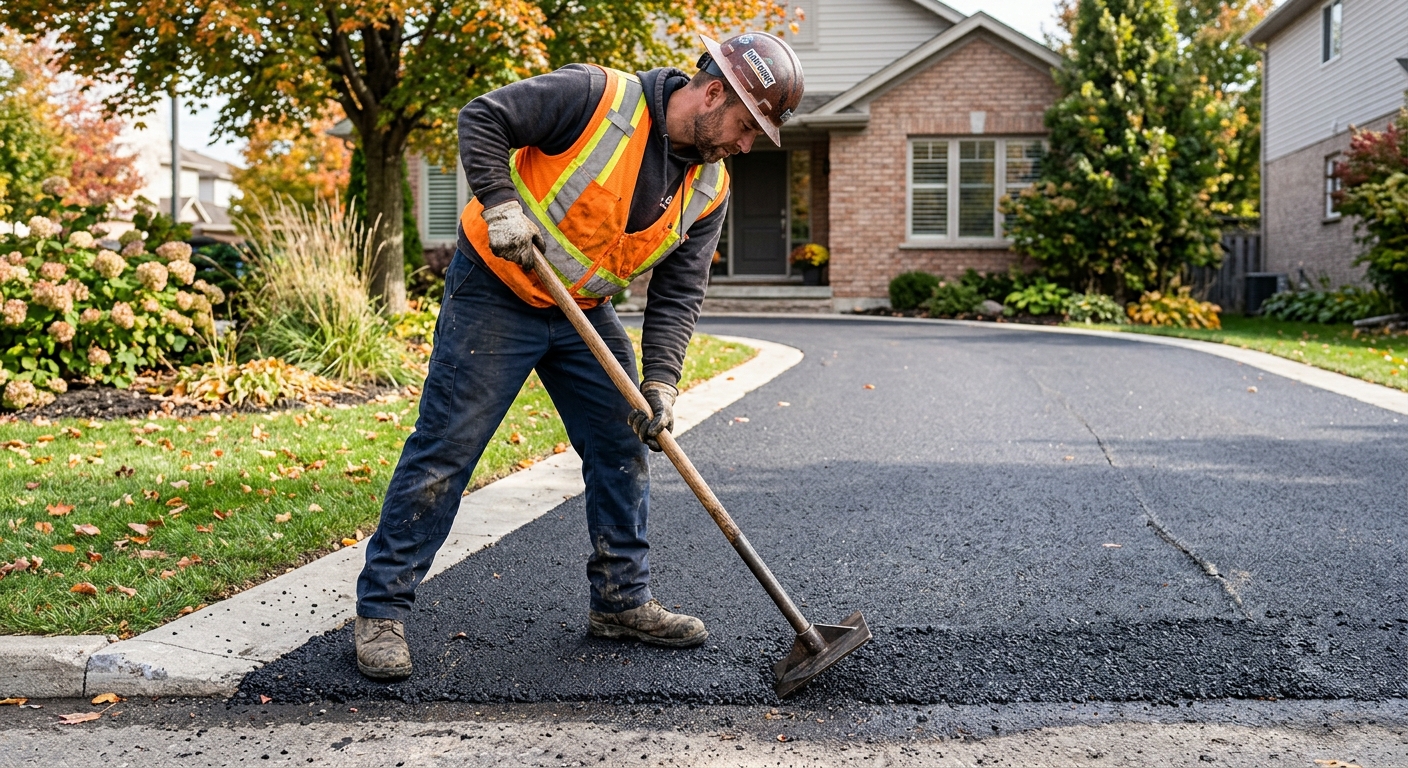
Aliquippa paving prices by scope — 2026
In Aliquippa, where 69.0% of homes are single-family and the homeownership rate sits at 59.1% (U.S. Census Bureau, ACS 2024), driveway paving is a core investment for most property owners. Southwest Pennsylvania’s freeze-thaw cycles and our local subgrade—often glacial till or stiff clay—mean a paved drive sees harsher conditions than in most places. If you’re comparing prices for a new asphalt or concrete driveway, the range can be wide, but the real story isn’t what you see on top—it’s what’s buried underneath. The depth and quality of the base, the aggregate placement, and drainage prep drive both cost and longevity, not just the surface asphalt or concrete. This invisible work matters especially here: local soils hold water and amplify freeze-related heaving and cracking.
Below is what you can expect to pay for typical driveway jobs in Aliquippa, based on Beaver County’s market and conditions. Cheap jobs generally skip base prep or thickness; high quotes sometimes overspecify what’s actually needed—but most big differences are out of sight.
| Service |
Best for |
Lifespan |
Price range |
| Asphalt — full replacement with new base |
failed base, structural cracking |
20–30 yrs |
$3,200–$8,100 |
| Asphalt overlay / resurfacing |
sound base, surface cracking only |
8–15 yrs |
$1,350–$4,100 |
| Sealcoating — single application |
preventive maintenance on sound asphalt |
2–4 yrs |
$175–$650 |
| Concrete — new installation |
long service life, low maintenance |
30–50 yrs |
$4,500–$11,000 |
| Crack filling and patching |
isolated cracks under a quarter inch |
1–3 yrs |
$200–$800 |
| Gravel driveway |
rural, budget, long runs |
5–10 yrs with upkeep |
$900–$3,500 |
Estimates for a typical Aliquippa driveway. Square footage and base condition drive these figures more than material choice.
Grading and water management on a Aliquippa driveway
On any Aliquippa driveway, water management starts before the first ton of asphalt or concrete is placed. With our heavy freeze-thaw cycles, even a small puddle on the surface or seepage under the asphalt will eventually lead to heaving, cracking, or outright base failure. The minimum finished slope is typically 2%, or about a quarter inch per foot, to ensure water drains away—not toward—the garage or house. Crowning (raising the center so water sheds both ways) is rare on narrow Aliquippa lots; a consistent cross-slope toward one edge is more typical.
Where the slope can’t be corrected, such as flat lots or drives sloping toward the house, a channel drain or trench drain set into the pavement is the fix. Runoff should exit to daylight whenever possible—a downslope lawn, swale, or storm inlet. The compacted clay common to this region drains slowly and holds water under your driveway, so dry wells are a last resort and demand careful sizing. Installing subdrains is sometimes worthwhile in clay-heavy zones, but not always cost effective for short residential drives.
Redirecting runoff onto a neighbor's lot is a quick route to disputes and liability in Beaver County, even if the code office overlooks it. Handle all runoff on your own property, both for code compliance and long-term peace.
The specifications to demand in writing
In Aliquippa, the toughest part of choosing a paving contractor is making sure you’re buying what you actually need. When comparing quotes, looking only at total cost almost always means you get shorted below ground—where it counts most, and is invisible to you. The quote should state, in numbers and in plain terms, exactly what will be done: how deep the excavation goes, what aggregate type and base depth will be installed and how compacted (in lifts, not just tamped top-down)—and the final, compacted thickness of every asphalt or concrete layer. "Three inches" means nothing unless it says "after compaction," because asphalt can lose 25% of its laid depth after rolling.
Southwestern Pennsylvania’s frost depth is 36 inches, and the region’s clay and shale subgrades mean we need thicker, better-compacted bases than areas with mild winters. You’re not overspending by specifying these details; you’re making sure you don’t pay for work that fails early or needs patching sooner than it should.
- Total area measured and staked (in square feet)
- Excavation depth (in inches), not “as needed”
- Base aggregate type (e.g., 2A modified gravel)
- Base course thickness (compacted, in inches)
- Compaction method and confirmation it’s done in layers/lifts
- Asphalt binder course thickness (compacted, in inches)
- Asphalt wearing/surface course thickness (compacted, in inches)
- Asphalt mix specification (ID number, e.g., PennDOT 9.5mm)
- Edge support method (tapered, full depth, or concrete border)
- Details of grading, slope direction, and drainage plan
Aliquippa's ground and what it means for paving
Aliquippa driveways rest mostly on compacted clay, shale, or glacial till subgrades. Clay soils, which are common in and around Aliquippa and Center Township, drain poorly—they hold water against the base of the driveway, significant in our heavy freeze-thaw climate. Shale and till, while better-draining, can be unpredictable and contain pockets that shift or settle under load. Each ground type dictates a different approach for base preparation: clay demands more excavation and a thicker, well-compacted aggregate layer; glacial till often requires careful leveling and drainage to get stable results.
Aliquippa’s housing stock, built mostly between 1940 and 1970, often included basic, undersized driveways that weren’t engineered for today’s standards. Many older driveways lack a sufficient aggregate base—the original builders often laid asphalt or concrete right over compacted subsoil. Replacing or resurfacing here means making the extra investment in removal and rebuilding the base, not just patching over the top.
The frost depth of 36 inches in Beaver County means any water trapped under the surface will freeze and expand, risking heaves if the drainage and sub-base aren’t right. This is why shortcut paving fails fastest in Aliquippa compared to counties with sandier or more forgiving soils.
Caring for a new Aliquippa driveway
For driveways in Aliquippa, the longest life comes from preventing water, not wear. The most cost-effective step is filling cracks as soon as they open. Even hairline cracks in asphalt can let water into the base—once in, our freeze-thaw cycles go to work and create bigger problems. Keep the edges supported with soil or stone, since unsupported asphalt or concrete will break off at the sides, especially when plows or delivery trucks cut the corner. Always keep water moving: gutters and downspouts should not discharge onto the drive, and avoid creating low spots that hold puddles.
On new asphalt, wait at least several days, or until the surface is fully cooled and firm, before parking vehicles. Avoid turning wheels while stopped for the first couple of weeks—especially in the sun—since the surface is softest then. Don’t place dumpsters or jack stands directly on new pavement; spread loads with plywood if you must.
For snow and ice, avoid rock salt on concrete—our swing between thaw and refreeze in southwestern Pennsylvania eats away at the surface. Magnesium chloride or calcium chloride are gentler, but cost more. With asphalt, it’s not the salt, but the forced thawing and rapid refreeze that causes cracking, so use sparingly and clear promptly.
What a real paving quote contains
If you’re collecting quotes for driveway paving in Aliquippa, look past the grand total and read the details. A real quote will show the measured square footage they’re charging for—never an “eyeball.” Excavation depth (with disposal of old material) should be spelled out, along with the exact type and thickness of the aggregate base. Compaction should be done in lifts and the method stated (plate compactor or roller). Asphalt details must include number of courses (base and surface), and thickness after compaction—not just what’s laid down. The edge treatment should be clarified: tapered, formed border, or left unsupported is a big distinction in longevity.
Look for grading and drainage notes specific to your lot—any quote silence about slope means future puddles are your problem. Cleanup, lawn repair, and the schedule of deposits and final payment keep everyone honest. Warranties typically only cover serious product failures, not routine cracking or edge damage—read closely.
The most common (and costly) homeowner mistake is accepting a one-line quote with a lump sum and no line-item details. If you can’t compare two quotes line by line, you can’t tell if you’re getting the same job—or the short end for your money.
| Line item |
What to look for |
Red flag if… |
| Area |
measured square footage stated |
eyeballed or absent |
| Excavation |
depth and disposal included |
'we'll pave over it' |
| Base |
aggregate type and depth in inches |
'proper base' |
| Compaction |
method, and done in lifts |
not mentioned |
| Asphalt |
courses and compacted depth |
'3 inches' unqualified |
| Drainage |
slope and water direction stated |
silent |
| Warranty |
what is covered and what is excluded |
verbal only |
| Payment |
modest deposit, balance on completion |
full cash up front |
What you need before paving in Aliquippa
For most homeowners in Aliquippa, if you’re resurfacing or repaving a driveway inside its current footprint, a building permit is typically not required. However, be aware that expanding the paved area or changing the layout may trigger requirements from your local code office, especially in certain municipalities within Beaver County. If your driveway approach—the section where your driveway meets a public street—needs replacement or widening, that almost always requires a PennDOT District 11-0 highway occupancy permit. Many are surprised by this, but PennDOT, not your township, controls these approaches for anything connecting to a state-maintained road.
If you are adding to the amount of impervious surface (for example, making a gravel drive paved, or widening), local permit review may also look at stormwater management. It’s not enough for runoff to drain anywhere except your own property. Directing any stormwater across a neighbor’s line is a reliable way to start a legal headache, even if no permit inspector ever visits.
For any residential paving contract over $500 in Pennsylvania, check that your contractor is registered as a Home Improvement Contractor with the Pennsylvania Office of Attorney General (hic.attorneygeneral.gov). Every employer must also have workers’ compensation—look it up on WCAIS (wcais.pa.gov) before you sign. Don’t skip these steps, especially if someone offers you a “deal” for cash.
Frequently asked questions — driveway paving in Aliquippa
How deep should the aggregate base be here?
In Aliquippa, given the heavy clay and glacial till soils and our regular freeze-thaw cycles, the standard is a compacted aggregate base of at least 6–8 inches for asphalt driveways. For concrete, 4–6 inches is usually sufficient, but more depth adds durability. Many driveways built before 1980 have much less—sometimes none at all—which is why surface overlays often fail quickly. If you’re comparing quotes, have them specify a minimum of 6 inches of compacted 2A modified stone for asphalt. Cutting this depth may lower the quote, but can lead to base failure and need for a full replacement (at $3,200–$8,100) years before its time.
What kind of soil is under Aliquippa driveways?
Most Aliquippa driveways are built over clay, shale, and glacial till. Clay is common in Beaver County and holds water against the base, which is a problem with our winter freeze patterns. Shale and glacial till offer different challenges—they can drain a bit better, but can also shift and settle if the prep isn’t right. Contractors in Aliquippa who don’t account for these soil types might underspec your base, shortening the lifespan of your new asphalt or concrete. That’s a fast track to needing a new installation, which costs between $3,200–$11,000 here.
Asphalt or concrete for a Aliquippa driveway?
Both materials are used in Aliquippa, but the decision often comes down to budget, appearance, and ongoing care. Asphalt is cheaper upfront ($3,200–$8,100 for full replacement) and handles freeze-thaw cycles better if maintained, while concrete lasts longer (30–50 years) and needs less frequent maintenance, but is more likely to spall from salt and costs more upfront ($4,500–$11,000). With our clay soil and heavy winters, asphalt often fails early if the base prep is skipped, while concrete can crack or pop from poor drainage or salt exposure. If low maintenance is your top concern, concrete wins, but not if you salt heavily every winter.
Why are paving quotes in Aliquippa so different from each other?
The big reason paving quotes in Aliquippa differ is the prep you either can or can’t see. Some quotes include deep excavation and proper base compaction—crucial for our clay soils and freeze-thaw climate—while cheaper quotes might just patch or overlay the old driveway. That can save you money now but leads to failures that require full replacement much sooner (which runs $3,200–$8,100). Also, disposal, drainage, and warranty terms can all vary. Always compare what’s really included, line by line. Be skeptical of one-line, lump-sum bids—those are common ways for homeowners to pay too much for underbuilt work.
Can asphalt be laid in cold weather?
Asphalt can technically be placed in cooler weather, but in Aliquippa, it’s rarely a good idea once daytime highs are below 50°F. Colder temperatures mean the asphalt cools and stiffens before it is properly compacted, leading to poor bonding and a much shorter lifespan. Most quality contractors in Beaver County will cut off residential paving for the season by mid to late October. If someone quotes you a job in late fall or winter, ask why—and, if you’re paying standard prices ($3,200–$8,100), you deserve work done under the right conditions for longevity.
When can I seal a brand new asphalt driveway?
For a newly paved driveway in Aliquippa, wait at least 90 days before applying sealcoat—sometimes longer if it's a cool or wet spring. Asphalt needs time to cure and off-gas solvents, and sealing too soon can trap oils and cause surface problems. Sealcoating is an important part of maintenance here, where sun and freeze cycles age asphalt fast, but timing matters for durability. Count on spending $175–$650 for a quality single application, but only once the surface has fully cured.
What causes concrete to spall or flake in Aliquippa?
Concrete spalls in Aliquippa mostly from a combination of freeze-thaw cycling and salt exposure. Our winters force moisture into the top surface of the concrete, and when it freezes, it pops off chunks—especially if deicing salts are used heavily. Poor finishing or overwatering the mix can make it worse. If your contractor doesn’t specify a durable mix and proper curing, you could see flaking in just a few seasons, leading to the need for repairs or a partial replacement (which can run $4,500–$11,000 here). Using lighter deicers—like calcium chloride—and keeping your driveway as dry as possible helps extend its life.
Can I cancel a paving contract I signed at my door?
In Pennsylvania, including Aliquippa, you have a 3 business-day right to cancel any home improvement contract signed at your home under the Home Improvement Consumer Protection Act. This applies even if you were pressured to sign on the spot. The cancellation must be written, and your contractor is required to give you notice of this right in the contract itself. If your agreement is over $500, you’re also entitled to a full written contract, not just a verbal promise, so don’t skip reading the fine print and keep a copy of your cancellation notice for your records.
How much does a concrete driveway cost in Aliquippa?
For a standard single-family home in Aliquippa, expect to pay from $4,500–$11,000 for a new concrete driveway, with a typical job around $7,200. Costs depend on square footage, site prep, and base work needed if your old driveway was built without a solid foundation. Concrete costs more upfront than asphalt but lasts much longer with less maintenance if installed right—especially important with our climate and soil conditions. Get quotes with all specs in writing so you know exactly what you’re getting for your investment.