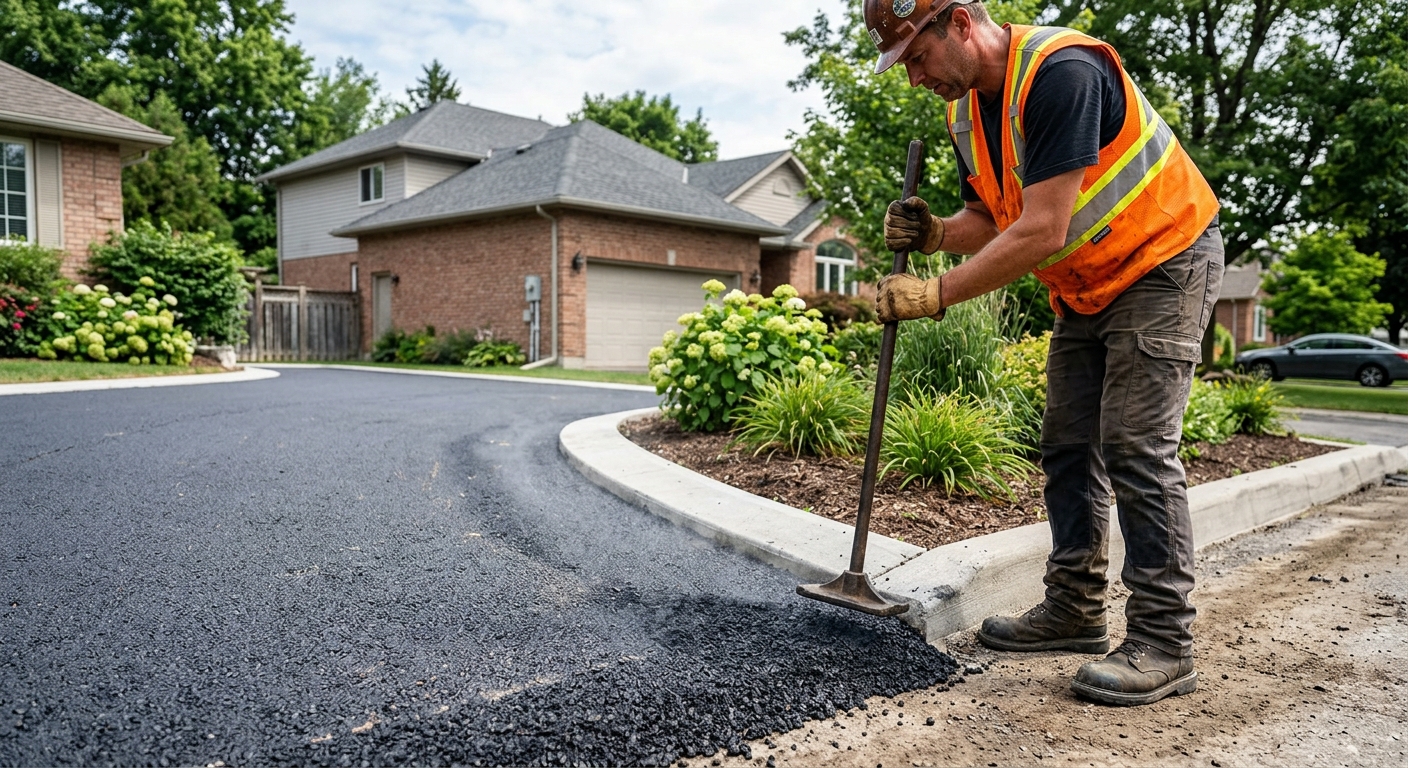
What a new driveway costs in Lower Allen
In Lower Allen, most driveway work serves single-family homes, as over half of the local housing is detached and the homeownership rate is 61.4% (U.S. Census Bureau, ACS 2024). A new or renewed driveway is one of the bigger home maintenance projects you'll take on, and the choices you make now affect longevity and performance—especially when winter puts the work to the test. South-central Pennsylvania means repeated freeze-thaw cycles that punish any shortcut in base preparation or drainage. Around Carlisle and Mechanicsburg, limestone subgrade brings its own headaches, from water movement to potential sinkholes if not compacted and graded correctly.
Most of the price difference between two quotes isn’t the asphalt you see—it's the stone, compaction, excavation, and drainage work hidden underneath. An underbuilt base shows up in heaving, cracks, and edges that fail early—even if the surface looks smooth on day one. Honest contractors will specify square footage, depth, base material, and every step you’re paying for. If the numbers look too good to be true, check what’s going under the surface—because that’s where shortcuts are cheapest but failure is most expensive.
| Service |
Best for |
Lifespan |
Price range |
| Asphalt — full replacement with new base |
failed base, structural cracking |
20–30 yrs |
$3,600–$9,100 |
| Asphalt overlay / resurfacing |
sound base, surface cracking only |
8–15 yrs |
$1,500–$4,600 |
| Sealcoating — single application |
preventive maintenance on sound asphalt |
2–4 yrs |
$200–$700 |
| Concrete — new installation |
long service life, low maintenance |
30–50 yrs |
$5,100–$12,000 |
| Crack filling and patching |
isolated cracks under a quarter inch |
1–3 yrs |
$200–$800 |
| Gravel driveway |
rural, budget, long runs |
5–10 yrs with upkeep |
$900–$3,500 |
Estimates for a typical Lower Allen driveway. Square footage and base condition drive these figures more than material choice.
Widening, extending or adding a parking pad
If you're looking to widen your driveway for a second vehicle, extend it to a detached garage, or finally pave the gravel run to your shed, the project is more involved than resurfacing what's already there. Expanding your driveway's footprint means breaking new ground—literally. The contractor has to excavate to the right depth, build a new stone base over undisturbed soils (often limestone in this part of Cumberland County), and tie new paving to old. That seam will always be a weak spot, so quality base prep and compaction are critical.
Beyond construction, check setback requirements and impervious-surface limitations. Cumberland County municipalities can restrict how close you pave to property lines and how much runoff you create—especially as recent rules target stormwater overflows. For new driveways or expansions onto township or state roads, you likely need an approach permit. On township roads, that's your township office; for driveways onto state routes, you need a Highway Occupancy Permit from PennDOT District 8-0. There's no short-cutting these, and skipping permits can mean redoing the work or fines down the road.
If changing the layout, plan on a full base build to match the life of your existing drive and prevent early failure where new meets old. For most Lower Allen households, it's not a DIY decision—you need approvals in place first or risk bigger headaches than a puddle at the end of your drive.
Comparing paving estimates in Lower Allen
No two paving estimates break down costs the same way—but you need to see how your money is actually being spent. Legitimate quotes for Lower Allen drives start with a measured square footage, not a guess. Ask for the excavation depth and make sure disposal of the old material is included; sometimes this gets dumped off-site and you pay more later. For the base, details matter: aggregate type (often local limestone in Cumberland County) and how deep it goes under both the main run and edges. Compaction should be specified and detailed as done “in lifts” with equipment noted, since this locks in density and prevents settling.
The asphalt portion should document number of layers (usually a binder then a surface course), and show the compacted thickness. Drainage deserves a line item—“graded for runoff” is not enough; you should see how water moves off the driveway and away from your home. Cleanup and topsoil repair, if needed, should be clear. The payment schedule typically means a small deposit, never full cash upfront. A warranty is only as good as what it excludes—many paving warranties don’t cover cracking due to base or edge failure.
Beware of a one-line “Price for driveway: $4,500” with no specs or detail—that’s where homeowners overpay for a thin, short-lived job. Insist on seeing exactly what each dollar buys.
| Line item |
What to look for |
Red flag if… |
| Area |
measured square footage stated |
eyeballed or absent |
| Excavation |
depth and disposal included |
'we'll pave over it' |
| Base |
aggregate type and depth in inches |
'proper base' |
| Compaction |
method, and done in lifts |
not mentioned |
| Asphalt |
courses and compacted depth |
'3 inches' unqualified |
| Drainage |
slope and water direction stated |
silent |
| Warranty |
what is covered and what is excluded |
verbal only |
| Payment |
modest deposit, balance on completion |
full cash up front |
Maintenance that actually works
Out of everything you can do for your driveway in Lower Allen, only a handful of actions actually extend its life. First, regular crack filling (especially before winter) keeps water from seeping to the base and breaking up pavement through freeze-thaw—this matters here because our climate cycles hard, and once the base is wet, the next cold snap will make cracks worse. Support your driveway edges: keeping soil or gravel at the same height prevents breakup from tire pressure and runoff. Monitor drainage, since standing water accelerates both asphalt and concrete damage.
Avoid parking heavy point loads—like jack stands, dumpsters, or trailers with narrow wheels—on either material for extended periods, since this causes depressions or cracking. After a new asphalt job, wait as advised (often several days, depending on temperatures) before parking. Avoid turning front tires in place, as “scuffing” is a real problem while the surface is curing in those first few weeks.
When it comes to de-icing, avoid salt on concrete—it chemically attacks the surface and leads to flaking (spalling), which is widespread in this region after harsh winters. On asphalt, the bigger concern is creating cycles of melt and refreeze. Alternatives like sand, calcium magnesium acetate, or kitty litter work but cost more; most homeowners use salt sparingly and focus on shoveling before applying anything. In this part of Pennsylvania, staying ahead of water and freeze is worth more than any product from the hardware store.
Sealcoating: what it does and what it doesn't
Sealcoating is the most advertised and least understood driveway service in Lower Allen. When properly applied, a sealcoat protects the top layer of asphalt from oxidation (sun and air break down the binder), keeps fuel and oil stains from biting in, and gives the whole drive a uniform black finish that looks new. It can be a good investment, especially if your driveway is structurally sound and you want it to look sharp and resist the slow march of weathering.
But—and it’s a big one—sealcoating does not add structural strength or fix a base already on its way out. If your driveway is failing because of a soft base or wide cracks, no amount of sealant will change the underlying problems. What isn’t often said is that sealing too often (yearly, for instance) actually causes more harm, building up layers that crack and peel. The first application on fresh asphalt should wait until the surface is fully cured, which is months, not weeks. Sealing too soon traps volatiles and weakens the surface you just paid for. In general, every 2–4 years is a sensible interval if needed, not an annual chore.
Crack filling matters far more for long-term lifespan, and should be part of a sealcoating visit if it’s offered. Thin, spray-on applications are often sold cheaply but don’t last—expect to pay $200–$700 for a thorough, brush-applied job on a typical Lower Allen driveway. If someone quotes you half that, you’re likely getting little more than tinted water. Ask about prep, how many coats, and if cracks will be cleaned and filled, not just sprayed over. Sealcoating’s true value is preserving what you’ve got—not hiding problems or fixing them.
Driveway permits, approaches and stormwater rules
If you're just resurfacing or sealing your existing driveway in most Cumberland County townships—including Lower Allen—a building or zoning permit is usually not required if you aren’t increasing the paved area. This saves both time and money, as you generally only need to notify the municipality if expanding or making significant structural changes. However, the spot where your driveway meets the public road—the approach—usually does require its own permit. For driveways connecting to state routes in Cumberland County, that permit comes from PennDOT District 8-0; if your drive meets a township road, your township office will handle it. Don’t assume your paving contractor handles the paperwork by default—ask directly and get it in writing.
Expanding a driveway or adding additional impervious surface can trigger local stormwater runoff rules. These rules exist to manage flooding and drainage, and you are responsible for making sure water doesn’t run off onto a neighbor’s property. Even if a permit isn’t required for the paving itself, liability for runoff remains—it’s not something a contractor can waive.
When hiring, verify the contractor’s Home Improvement Contractor (HIC) registration at hic.attorneygeneral.gov. All contractors with employees must carry workers’ compensation insurance; you can check their coverage through Pennsylvania’s WCAIS database. Never take a handshake or business card as proof—always check for yourself using the state’s official registries to avoid scams and uninsured jobsite risk.
Why you can't pave in February
Paving in Lower Allen is limited by reality, not preference. Hot-mix asphalt, the standard for driveways here, must be laid and compacted while hot—if the air or ground is too cold, the mix cools too quickly to compact properly, trapping voids and reducing lifespan from the start. South-central Pennsylvania sees winter design temperatures around 12 °F, and we get pronounced freeze-thaw cycles with moderate snow. Asphalt plants near Carlisle and Mechanicsburg simply stop producing from late fall to early spring—the material isn’t available, so you can’t pave even if you wanted to.
Concrete also requires special care. Above-freezing conditions are essential for proper curing, or you'll see scaling and flaking in the first year. The freeze-thaw environment only magnifies these risks. Even in early spring, cold snaps can blow up a new job if not timed properly.
The upshot: shoulder seasons like April–June and September–early November are best for quality and scheduling flexibility. Crews book up fast for the summer peak. If someone calls offering to pave in February or after the plants have closed, that should be a major red flag—they're either inexperienced or they plan on shortcuts. Booking early in the season keeps your project on track and gives you time to check references, insurance, and credentials without being rushed by weather or a busy schedule.
Frequently asked questions — driveway paving in Lower Allen
Can I cancel a paving contract I signed at my door?
Yes, in Pennsylvania—including Lower Allen—you have a legal right to cancel a home improvement contract within three business days if it was signed at your home or another location away from the contractor’s business. This rule comes from the Home Improvement Consumer Protection Act, which is there to protect homeowners from high-pressure or door-to-door sales tactics. Your written contract should clearly state this right and include a cancellation form. If it doesn’t, that’s a sign you may not be dealing with a reputable contractor. If you've already paid a deposit (for example, toward an asphalt overlay that was quoted at $1,500–$4,600), the contractor must return it if you cancel within the period. If you feel pressured, take your time—law is on your side for three days.
What does an asphalt overlay cost in Lower Allen?
For a standard single-family driveway in Lower Allen, an asphalt overlay—sometimes called resurfacing—typically runs between $1,500–$4,600, with most jobs closer to $3,000. The price depends on the width and length, and especially the condition of the current base. Overlay is only recommended if your existing stone base is firm, with no signs of major cracks or sinking. If the base has problems, an overlay just "seals in" those issues to show up later. This estimate assumes the old asphalt is milled or cleaned, tack is properly applied, and a fresh 1.5–2 inch hot-mix layer is installed and compacted. Low quotes often skip on prep or skimp on thickness, so make sure you're seeing a breakdown and not just a lump sum.
Are door-to-door pavers a problem in Lower Allen?
Door-to-door pavers do pass through Lower Allen and other Cumberland County neighborhoods, especially in the spring and early summer. While not every traveling crew is a scam, this area sees its share of complaints about hurried jobs—especially on overlays and sealcoating offered "because we have leftover asphalt from another job." Most of these crews avoid written contracts and may not have a valid Home Improvement Contractor (HIC) number as required by Pennsylvania law. Legitimate contractors working in Lower Allen will offer you a detailed estimate, proof of insurance, and contract terms that match local price bands—typically $3,600–$9,100 for a full replacement. Always use the state's HIC registry to check their credentials before signing anything or paying a deposit.
Is sealcoating a scam?
Sealcoating isn’t a scam in itself; in Lower Allen’s climate, it can help extend the appearance and weather resistance of a sound asphalt driveway. It does not, however, repair structural problems, cracks wider than 1/4 inch, or add years to a driveway with a failed base. The real scam is paying for repeated, thin spray-on applications or buying a service every single year, which locals sometimes get pressured into. A proper, brush-applied sealcoat (costing $200–$700 for a standard drive) should be done every two to four years, not annually. Think of sealcoating as sunscreen for your driveway—a helpful layer, but not a cure for real problems. Always ask about crack repair and expected thickness before hiring.
Is an overlay worth it or should I start over?
An asphalt overlay can be a good value in Lower Allen if your existing base is stable and cracks are mostly cosmetic. It gives you a fresh surface for $1,500–$4,600, about half the price of a full replacement. But overlays do nothing for deep cracks, soft spots, or drain problems—they just cover them. If your driveway has multiple sink areas or you see shifting and water that doesn’t drain, replacement with a fresh stone base is the only lasting fix. It costs more upfront, but you avoid paying for overlays every few years and fighting the same issues again and again. A reputable contractor will advise the best route after inspecting your base, not just push for the pricier job.
How thick should asphalt be for a residential driveway in Lower Allen?
For a typical residential driveway in Lower Allen, asphalt should be installed in two compacted layers—usually 2 inches of binder course and 1.5 inches of surface course, for a total of around 3.5 inches after compaction. Thickness matters more here because of the freeze-thaw climate and local limestone subgrade, which can cause shifting if not properly supported. Some contractors will try to win jobs by offering a single 2-inch layer, but this almost guarantees early edge failure and cracking within a few winters. With the going price for full replacement at $3,600–$9,100, it's worth paying for proper depth and a detailed breakdown in your contract.
How far ahead should I book a paver in Lower Allen?
Asphalt paving in Lower Allen is highly seasonal, with most of the work taking place April through October. Crews typically book out three to six weeks in advance from late spring through the summer peak. Booking early gives you time to compare quotes and check references; booking late may mean paying summer premium rates—prices often approach the upper end, like $5,600–$9,100 for a full replacement. If a contractor promises immediate availability mid-summer, ask why—reputable outfits are rarely idle in that window. Shoulder seasons in April–May and September–October offer more flexibility and sometimes better pricing, especially if you're not in a rush.
What causes concrete to spall or flake in Lower Allen?
Concrete spalling in Lower Allen is almost always linked to freeze-thaw cycles and the use of de-icing salts, which attack the surface and open up pores to more water. New driveways are especially susceptible if concrete is poured in cold, damp conditions or isn't allowed to cure properly before winter. Subgrade matters here too—limestone below the slab can hold water right under the surface, exacerbating the freeze problem. Once flaking begins, patching is possible but rarely blends in seamlessly. For a new concrete drive (budget $5,100–$12,000), proper install timing and minimal salt use are your best protections against early spalling.
How much does a concrete driveway cost in Lower Allen?
A new concrete driveway in Lower Allen typically falls between $5,100–$12,000, depending on the size, base preparation, and any custom work like colored or stamped finishes. The typical job is closer to $8,100 for a standard two-car drive. Concrete lasts longer than asphalt—30 to 50 years isn’t unusual—but is higher upfront. The costs here are kept somewhat stable by local limestone quarries, as hauling isn’t a major factor. For the best performance, make sure your contract specifies 4-inch or thicker slab poured over well-compacted stone, and that control joints are installed to handle our regional freeze-thaw cycles. Cheap concrete jobs that skip base prep or rely on minimal thickness almost guarantee cracking and spalling in a few winters.