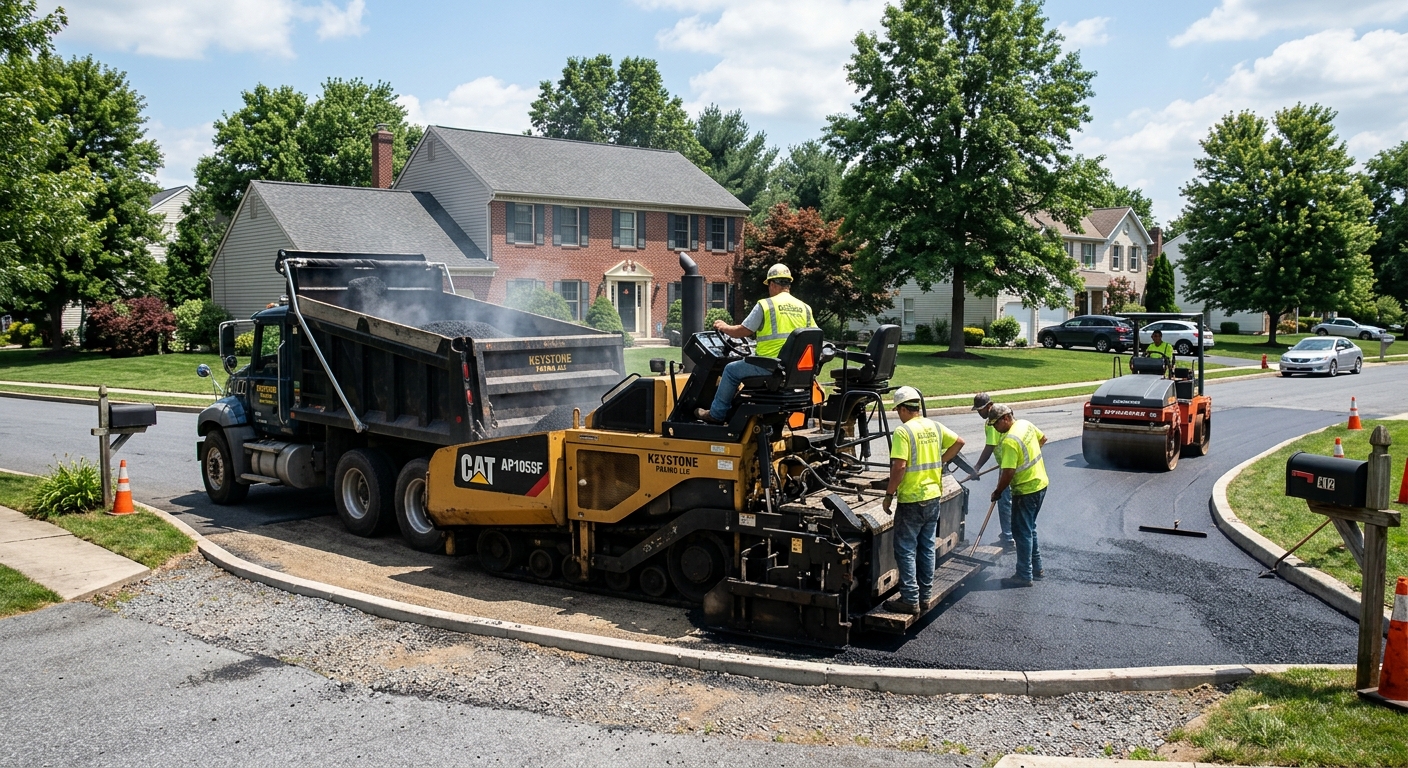
What a new driveway costs in Coal
In Coal, where over 80% of homes are owner-occupied and single-family properties make up the majority of housing (U.S. Census Bureau, ACS 2024), a driveway isn’t just an aesthetic choice—it’s a core part of your property’s function and value. Long winters, deep frost, and a base of shale or glacial till mean driveways here face constant freeze-thaw cycles. That’s why most price differences between quotes aren’t about the finish you see, but about what’s under the surface—excavation, base preparation, and compaction are where both cost and quality are buried.
Driveway replacement costs in Coal reflect rural travel surcharges and the need for deeper, better-prepared bases. In this region, experience with old river-town housing—often with edge failures and needed drainage fixes—matters as much as material choice. Be cautious comparing prices at face value. One crew might recommend a thin resurface over a failed base; another might urge a full-depth rebuild. Without digging down, you can’t tell which, but in a place with Coal’s weather and soils, skimping below ground is a false economy.
| Service |
Best for |
Lifespan |
Price range |
| Asphalt — full replacement with new base |
failed base, structural cracking |
20–30 yrs |
$3,100–$8,000 |
| Asphalt overlay / resurfacing |
sound base, surface cracking only |
8–15 yrs |
$1,350–$4,000 |
| Sealcoating — single application |
preventive maintenance on sound asphalt |
2–4 yrs |
$175–$600 |
| Concrete — new installation |
long service life, low maintenance |
30–50 yrs |
$4,500–$10,500 |
| Crack filling and patching |
isolated cracks under a quarter inch |
1–3 yrs |
$200–$800 |
| Gravel driveway |
rural, budget, long runs |
5–10 yrs with upkeep |
$900–$3,500 |
Estimates for a typical Coal driveway. Square footage and base condition drive these figures more than material choice.
Driveway permits, approaches and stormwater rules
For most homes in Coal and throughout Northumberland County, repaving an existing driveway (same footprint, no expansion) rarely requires a building permit, saving you time and paperwork. The key exception is where your driveway meets the public road—this “approach” often needs its own permit. In Sunbury, connecting to a state highway triggers the need for a PennDOT Highway Occupancy Permit, and driveways off state highways anywhere in the county require approval from PennDOT District 3’s maintenance office. Many homeowners mistakenly expect a municipal permit instead, so check the actual authority before any work starts.
Stormwater rules matter in Coal: expanding your driveway or paving over lawn can bump you into runoff requirements. Local ground—shale and glacial till—already drains poorly, so making your driveway bigger without proper grading can push water onto a neighbor’s lot or into your basement. No permit protects you from the liability of creating runoff problems. Always ensure water from your new surface stays on your own property or is managed by a clear drainage path.
For peace of mind, Pennsylvania contractors must have Home Improvement Contractor (HIC) registration for jobs over $500—you can verify this at hic.attorneygeneral.gov. Workers’ compensation for every crewmember is required by law; check a company’s insurance status through WCAIS (wcais.pa.gov) to avoid becoming responsible for an injury on your property.
Caring for a new Coal driveway
The biggest factor in a long-lasting Coal driveway is stopping water from reaching the base. Regular crack filling comes first—seal every crack before it widens, especially in the fall, to keep freeze-thaw cycles from splitting your driveway open under pressure. Next is edge support: in an area where driveways built before 1980 often have failing sides, backing up edges with stone or curb helps keep them from breaking off. Keep water moving—good drainage is critical in Coal’s long, cold winters. Clear leaves and debris, check that downspouts don’t empty onto the drive, and watch for ruts where water pools.
Avoid sudden point loads like jack stands and dumpster wheels. These press down with much more force than a car tire and can crack even new asphalt or concrete, especially as the frost goes out of the ground in spring. When installing new asphalt, wait a minimum of three days before driving on it (more in cool weather) and avoid turning wheels in place for at least a month—it tears the surface until the binder hardens.
De-icing matters: salt works, but on concrete it leads to scaling and early breakdown, especially here where frequent snow means frequent use. On asphalt, salt isn’t chemically aggressive, but the refreeze after melting lets water into every weak spot. Sand, calcium magnesium acetate, or even plain gravel cost more than rock salt, but are safest for the surface. In Coal’s climate, low-salt or mechanical removal will pay off in longer driveway life.
Door-knocking crews and leftover material
Paving brings out transient crews for a reason: the job’s faults can stay hidden under the surface for years, and the work is simple-looking enough for anyone with a truck and some tools to pretend at professionalism. In Northumberland County’s thin rural market, these crews target neighborhoods where verification is harder and word travels slower. The most common pitches are always the same: “We have leftover asphalt from a job down the road,” “We can give you a today-only price—cash up front gets the deal,” and “We have a verbal quote, we’ll come right back and start.” Watch for out-of-area license plates and unmarked trucks; a legitimate contractor doesn’t rush or dodge paperwork.
For sealcoating, the warning sign is even clearer—a slick oil-based spray sold as a miracle fix for old driveways. Not only will it wash away in the next rain, it can even corrode your base material. Pennsylvania’s Home Improvement Consumer Protection Act (HICPA) gives you the right to a written contract for any job over $500 and a three business-day period to cancel. Any crew who resists these steps is not interested in following the law.
To stop a scam in five minutes, check HIC registration at hic.attorneygeneral.gov, ask for proof of workers’ compensation from WCAIS, demand a written scope of work with base thicknesses and materials, and never pay in full until the job is complete. Refusing any of these is your go-ahead to walk away.
Finding a legitimate paver in Northumberland County
Vetting a paving contractor in Northumberland County means more than asking for references or an insurance card. Pennsylvania requires Home Improvement Contractor (HIC) registration for all contracts over $500—check every company at hic.attorneygeneral.gov. Also confirm active workers’ compensation through WCAIS. Legitimate outfits work from a fixed local address, not just a cell phone. Pay attention to owned (not rented) equipment—travel surcharges here mean rental crews rarely stick around, especially if trouble crops up years later.
References should include driveways done three or more years ago in Coal or nearby towns—anything newer only proves they can smooth hot mix, not that their base preparation will last. Ask who supplies their asphalt: a contractor who can’t name which local plant or quarry they use is likely brokering work or reselling surplus. In Coal, where local aggregates are available but haul distance affects price, any dodge around supplier is a red flag.
- Verify HIC registration at the state site
- Check workers’ compensation status via WCAIS
- Demand a physical local business address
- See insurance certificates—don’t just take their word
- Ask for references from at least three years ago
- Require a clear, written contract—no verbal only
- Ask who their asphalt supplier is
- Confirm they own and operate their own equipment
- Read the company’s reviews—look for patterns, not just scores
- Require base depth and material specs in writing
- Do not pay in full or in cash up front
- Get proof of local jobs, not just photos
Red flags: changing company names, only accepting cash, no fixed phone, refusing specific base details, or pushing “today only” pricing. Slow down and check—the risk of getting it wrong is years of expensive repair.
What's under the asphalt matters more than the asphalt
A driveway built to last in Coal starts with what’s underneath. The real structure is three layers: the subgrade (native soil, typically shale or glacial till here), then compacted aggregate base, and only then the asphalt you see. Each layer spreads the force out—thin or loose base material means all the load gets dumped onto weak spots, causing cracks and sinkholes even if the surface looks perfect at first.
Frost heave is your main enemy. In Coal’s north-central Pennsylvania winters, water in the subgrade freezes and expands, lifting slabs unevenly and splitting pavement from below. That’s why a deep, well-drained base is non-negotiable: it keeps water moving and gives ice less to lift. Skimping on excavation (not undercutting soft spots or organic material), using marginal fill, or laying aggregate too thin is where lowball quotes cut corners. Compaction matters just as much—if the stone isn’t rolled and tested in layers (“lifts”), it settles and washes out over time, especially in old river-town lots that already see drainage trouble and edge failure.
These shortcuts don’t show up until year three: edges crumble, water pools in ruts, cracks spider out from patched spots. That’s when the real price of a cheap job appears. Demand written specs—at least 6 inches of compacted aggregate base for asphalt in this soil, the type of stone (typically 2A modified or similar), and confirmation that compaction happens in lifts no more than 4 inches at a time. Get proof of base prep before paying the final bill. In Coal’s climate, what you see on top is just the last step. What matters is buried, and good contractors will be transparent about what they’re building under your wheels.
Sealcoating: what it does and what it doesn't
Sealcoating is often sold as a cure-all, but in Coal it’s best seen as periodic maintenance for an already-sound asphalt driveway—not a fix for cracks or a way to gain years on bad base work. Sealcoating forms a thin protective layer that slows down oxidation (hardening from sun and air) and shields the binder from fuel and oil spills. It also improves curb appeal, giving an even, dark finish. What it can’t do: add structural strength, hold together failing edges, or bridge cracks. If the base is already washing out or the surface is alligatored, sealcoating won’t stop further damage.
Applying sealcoat too often—especially in Coal’s climate, where curing is slow—actually causes buildup that will crack, peel, and trap moisture. Proper interval is every two to four years, not annually. Never seal new asphalt until it’s fully cured, which in this region’s long, cold seasons is at least a year. Waiting allows the surface to harden, so sealant can actually bond and perform as intended.
The real maintenance duty is timely crack filling. Filling keeps water out of the base and stops freeze-thaw cycling from splitting the drive. A thin, watery spray sold cheap ($175–$600) is a red flag—proper sealcoating is squeegeed or brush-applied, and never offered as a one-hour “extra” after another job. If the price looks suspiciously low, expect a triple-diluted job that will wash away in one Coal Township winter.
Frequently asked questions — driveway paving in Coal
Is an overlay worth it or should I start over?
If your driveway in Coal has surface cracks but the base is still solid—no deep dips, no soft spots, and the edges are stable—then an asphalt overlay can offer 8 to 15 more years of use for a much lower price ($1,350–$4,000) than a complete rebuild. However, overlays are only as good as what they cover; if the underlying base is failing, you’ll see cracks return quickly, usually within a season or two due to Coal’s freeze-thaw cycles and shale/till-based soils. Be wary of any contractor who recommends an overlay without a close inspection or core sample. For driveways showing structural cracks or chronic drainage issues, starting over with excavation and new base is the only way to get true longevity. Don’t be rushed into a resurfacing that will only hide—but not solve—an existing problem.
What is the difference between crack filling and sealcoating?
In Coal, crack filling and sealcoating do two different jobs. Crack filling uses specialized rubberized material to fill and bridge individual cracks, keeping water from penetrating your asphalt and ruining the base—especially critical before Coal's winter freeze-thaw sets in. This is first-line maintenance, cheap insurance at $200–$800 per round. Sealcoating, on the other hand, covers the entire driveway with a thin protective layer that slows UV and chemical damage and refreshes appearance. It doesn't add any structure or stop deep cracks. Crack filling should come before sealcoating, since sealing over unfilled gaps means water can still get below. Think of crack filling as stitch work for wounds, and sealcoating as sunscreen—it helps, but only on healthy skin. Both need correct timing and honest application for Coal’s climate.
How deep should the aggregate base be here?
For driveways in Coal, a compacted aggregate base of at least 6 inches is standard, due to our combination of shale and glacial till soils and deep frost (36 inches winter depth). That’s more than you’ll see recommended in warmer or sandier places, but it’s needed here to avoid frost heave and rutting. Some older river-town driveways were built with 3 or 4 inches, which is not enough for today’s traffic and climate. If your quote skips a measured excavation or tries to save money by going thinner, expect trouble in years—not decades. Insist on seeing base depth in the contract, and clarify which local aggregate (2A modified is most common here) will be used.
What are the signs of a failing driveway base?
In Coal, the main signs of a failing base are low spots (birdbaths) that hold water, cracks that widen and intersect (alligatoring), soft or “mushy” areas when walked on after rain, and edges that crumble or shear away. You might also see repeated potholes returning in the same locations every spring. These indicators mean water has gotten underneath or the base was either too thin or poorly compacted—issues made worse by Coal’s relentless freeze-thaw cycles. Surface repairs or sealcoating won’t fix these problems. Addressing them may require a full rebuild ($3,100–$8,000), but it’s the only way to restore structure and stop the cycle of yearly patching.
How much does it cost to widen a driveway?
Widening a driveway in Coal typically costs the same per square foot as a new section, because it requires full-depth excavation, new base, and compaction to match the old drive. For asphalt, expect most projects to fall between $3,100–$8,000 for a typical driveway size, depending on how much wider you go. Small extensions (just a few feet) at the edge may run less if the ground is already prepared, but always plan for some extra undercutting and drainage correction—especially with our shale and till soils. Water management is critical when adding width, since pushing the edge further out can direct runoff the wrong way. Get a written quote that specifies excavation, base thickness, and tie-in method to the original drive.
When is the best time of year to pave in Coal?
The best time to pave in Coal is late spring through early fall, when temperatures are warm enough for proper asphalt compaction and curing—typically May through September. Asphalt plants run reliably, and you’re less likely to get caught by early frost or frequent rainfall that prevents new pavement from setting up. Cold weather or unexpected snow will stop work and cause rushed jobs, especially here, because our ground doesn’t thaw out until well into April. Avoid late fall paving unless the weather is proven stable. Concrete can tolerate slightly cooler weather, but both materials suffer if placed too soon before a freeze. While pavers may offer “end of season” deals, weigh the risk—a job rushed in late October could cost you much more in repairs a year or two later.
How much does a concrete driveway cost in Coal?
For a new concrete driveway installation in Coal, expect to pay anywhere from $4,500–$10,500, with the typical job right around $7,100. These numbers account for the extra base prep and travel distance seen in rural Northumberland County, where crews often factor in haul costs for concrete and finishing labor. Concrete offers 30 to 50 years of service when built on a proper base, but don’t skimp on jointing or sealing, or winter salt and freeze-thaw will ruin the surface. Old Coal housing stock means you may encounter drainage or grading work, which can push costs to the upper end of this band, but also ensures a long-term finish if done correctly the first time.
Does road salt damage driveways in Coal?
Yes, in Coal, road salt can damage concrete driveways by causing surface scaling and cracking—particularly here where salt is used heavily and the season is long. On asphalt, salt is less harmful chemically, but the problem comes from the freeze-thaw cycle: salt melts snow, water gets into cracks, and then refreezes at night, breaking things open below. For concrete, consider alternative de-icers like calcium magnesium acetate or plain sand, though both cost more than rock salt. For asphalt, occasional salt use is less worrisome, but staying ahead of cracks and resealing every couple of years ($175–$600) will help resist moisture penetration and frost damage.
How do I verify a paving contractor in Pennsylvania?
In Pennsylvania—and especially in Coal, where door-knocking crews pass through every season—start by checking Home Improvement Contractor (HIC) registration at hic.attorneygeneral.gov for any job over $500. All proper contracts must be in writing with a three business-day right of cancellation, per state law. Ask for proof of workers’ compensation using WCAIS (wcais.pa.gov), and look for a listed local business address. For real confidence, request references from at least three years ago in Coal or elsewhere in Northumberland County. Ask about who supplies their stone or asphalt (local plant or quarry), and be wary of anyone who cannot answer or who only accepts cash up front. Solid contractors will price their work transparently—an honest driveway replacement here runs $3,100–$8,000—and will not rush you into a decision.