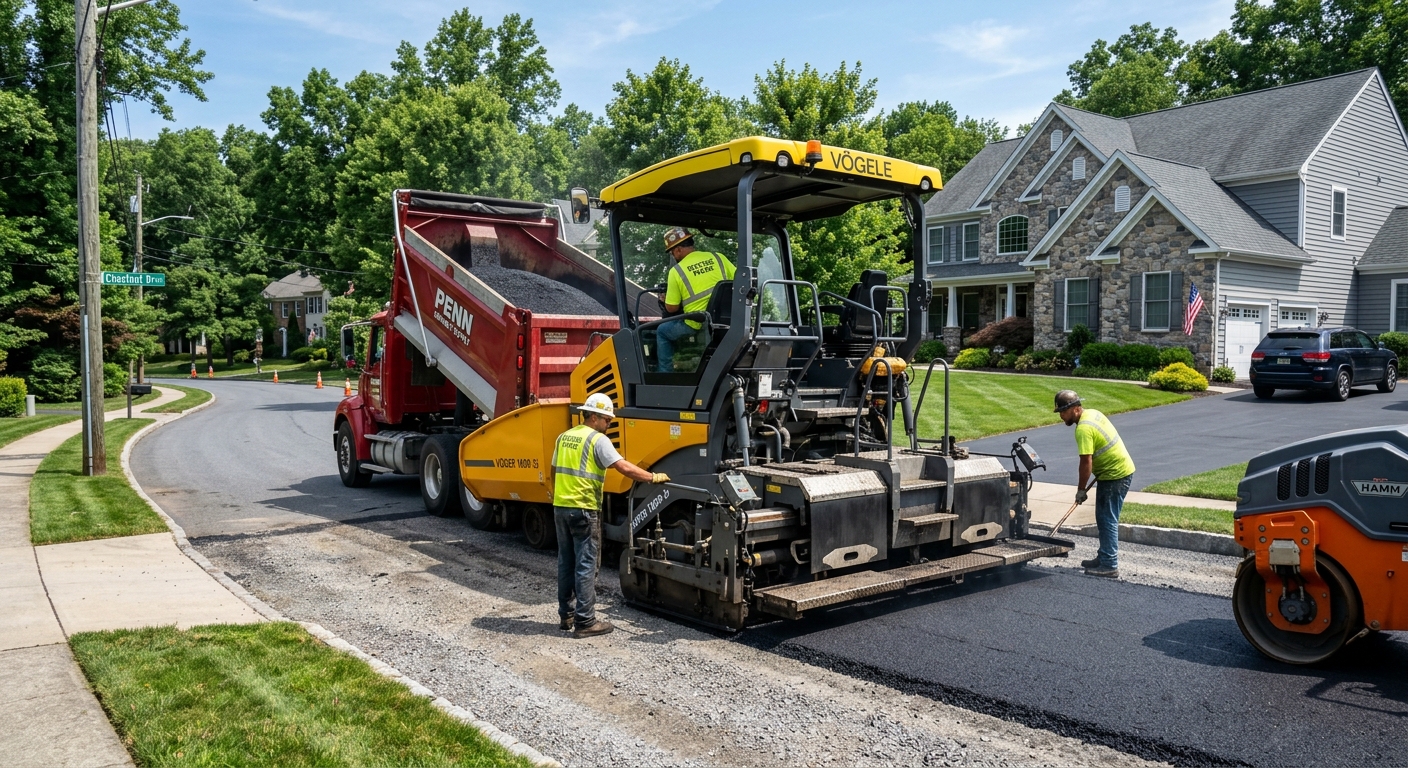
Driveway paving costs in Moon — 2026
In Moon, where over 70% of homes are single-family and the homeownership rate is 78.1% (U.S. Census Bureau, ACS 2024), driveway expenses come with the territory. Most detached homes here have their own driveways, and aging surfaces are the norm—over half were built before 1980. Moon's hilly setting atop clay and shale subgrade, combined with heavy freeze-thaw cycles, means driveways face harsh conditions year after year. If you get several paving bids, you’ll notice the price range is wide. What drives that most isn’t the asphalt you see, but what’s under it—the base you can’t inspect and the site prep you don’t witness. Two driveways might look identical on paving day, but if one has a well-compacted, deep base and solid drainage, it’ll last a decade or more longer.
| Service |
Best for |
Lifespan |
Price range |
| Asphalt — full replacement with new base |
failed base, structural cracking |
20–30 yrs |
$3,800–$9,600 |
| Asphalt overlay / resurfacing |
sound base, surface cracking only |
8–15 yrs |
$1,600–$4,800 |
| Sealcoating — single application |
preventive maintenance on sound asphalt |
2–4 yrs |
$225–$750 |
| Concrete — new installation |
long service life, low maintenance |
30–50 yrs |
$5,400–$13,000 |
| Crack filling and patching |
isolated cracks under a quarter inch |
1–3 yrs |
$200–$800 |
| Gravel driveway |
rural, budget, long runs |
5–10 yrs with upkeep |
$900–$3,500 |
Estimates for a typical Moon driveway. Square footage and base condition drive these figures more than material choice.
What's under the asphalt matters more than the asphalt
The surface blacktop is only the topmost layer of a Moon driveway. The true strength is built from the ground up: first, the subgrade (often clay or shale here), then a properly compacted aggregate base, then the asphalt. Each layer spreads the load of your vehicles downward. In southwestern Pennsylvania, where freeze-thaw cycles are hard on pavements, this layered assembly is essential. Water in the clay or shale subgrade expands when frozen during winter, causing “frost heave.” The process lifts sections of your driveway unevenly, cracks the slab from the underside, and can permanently damage the surface. Good drainage and a thick, well-compacted base are your best defense. Skimping below the surface can’t be fixed afterward without starting over.
This is the trap with budget paving quotes. It’s easy to use leftover or scant aggregate, skip real compaction, or lay new asphalt over a failing base. You’ll see a smooth driveway on day one, but in Moon, the consequences appear fast: dips, cracks, drainage ruts, or whole sections heaving by the third winter. These flaws all stem from shortcuts underground. A solid job requires the crew to excavate deeply (typically 8–12 inches for base prep here), lay quality crushed stone, compact in 2- to 4-inch lifts with a heavy roller, and use base material that drains well. Insist on these details in your contract:
- Excavation to at least 8 inches below finished grade
- Minimum 6–10 inches of PennDOT #2A modified stone or equivalent
- Compaction of base in lifts (2–4 inches per lift), not all at once
- Proof-rolling or compaction testing offered if you want extra assurance
If your quote doesn’t specify these from the start, you may not be comparing apples to apples—and probably not comparing driveways that will last equally in Moon’s climate.
What to put in a Moon paving contract
Most homeowners in Moon shop driveways by price, but that’s a risk in this climate. What lasts here isn’t just who offers the lowest bid, but who delivers a job that can outlast heavy freeze-thaw cycles and rolling, clay-based ground. The right way to compare quotes is to look for concrete numbers and clear methods in the proposal. Terms like “three inches” don’t mean much unless you see “as compacted,” not “as laid.” Material compresses when rolled, and without clarity in contract terms, a loose three-inch lift becomes less than two inches when done—a recipe for early failure in Moon’s tough winters.
Here’s what needs to be spelled out in writing—Moon’s hills and freeze/thaw cycles mean sloppy shortcuts show up faster than in milder spots:
- Excavation depth below finished grade (target 8–12 inches here)
- Aggregate base type (e.g., PennDOT #2A modified) and depth (6–10 inches compacted)
- Statement on base compaction, and that it’s done in lifts
- Base compaction method (heavy vibratory roller, not just plate compactor)
- Base course asphalt thickness, as compacted (at least 2–2.5 inches)
- Surface course asphalt thickness, as compacted (at least 1.5–2 inches)
- Asphalt mix designation (state mix, not just “blacktop”)
- Edge treatment—how edges are built up to prevent crumbling
- Drainage plan—where does the water go?
- Start-to-finish timeline and protection of adjacent property
Takeaway: details matter more than any price when you live and own in a place with real winter and unstable ground. If your contractor won’t specify in writing, move on.
What you need before paving in Moon
If you’re resurfacing or replacing a driveway within its original boundaries in Moon, you usually don’t need a building permit—saving you time and paperwork. But the exception is the driveway approach, the section that ties into the public road. In Allegheny County, that means a Highway Occupancy Permit from PennDOT District 11-0 if your driveway connects to a state road. For right-of-way changes—like curb cuts or apron work in Pittsburgh—permits come from the Department of Mobility and Infrastructure. In most suburban municipalities here, including Moon, private-driveway resurfacing on your property typically doesn’t involve a separate permit, but it’s up to the municipality.
Stormwater is another issue: paving over lawn or expanding your driveway’s footprint often triggers runoff requirements. Dumping surface drainage onto a neighbor’s lot isn’t just impolite—it puts you at risk for lawsuits, regardless of what the borough allows.
Before signing any paving contract over $500, make sure your contractor’s Home Improvement Contractor registration can be checked at hic.attorneygeneral.gov, and that their workers’ compensation status matches what they claim—verify through WCAIS at wcais.pa.gov. For older homes (built pre-1978), ask about EPA Lead Renovation, Repair and Painting (RRP) certification at certifiedrenovatorsearch.epa.gov. Getting these straight now beats chasing paperwork after a mess.
Maintenance that actually works
The best maintenance for a Moon driveway is simple but essential. First, fill cracks as soon as you spot them—when water gets through the asphalt and into the base, freeze-thaw cycles do their worst and shorten lifespan fast. Even a $200–$800 crack filling can dodge expensive full replacements. Next, keep driveway edges supported with topsoil or gravel so they don’t crumble. Always direct water away from the driveway—good gutters and sloped grading save your pavement from heave and rutting. Avoid parking heavy dumpsters, trailers, or jacks on small spots; they can indent or crack even new asphalt.
If you’ve just paved, stay off for as long as your contractor recommends—usually at least 3–7 days for asphalt, and longer in cooler weather. Turning wheels in place on soft new pavement causes surface scuffing.
De-icing is different for each material. Salt eats away at concrete, spalling the surface; best is to use sand or products labeled “concrete safe.” On asphalt, salt isn’t the enemy—the main concern is rapid melt-refreeze, which sends water into microcracks that become bigger with each cycle. Sand, beet juice, or calcium magnesium acetate cost more but spare your slab. In Moon, plan for tough winters and choose maintenance that fits the real climate, not what you wish it was.
Sealcoating: what it does and what it doesn't
Sealcoating is pitched heavily across Moon and the Pittsburgh metro, and there’s truth on both sides. What sealcoating does well is slow the oxidation of the asphalt binder—good against sunlight and makes oil or gas spills easier to wipe up. It also dramatically freshens your driveway’s appearance. But despite what many flyers claim, it doesn’t add strength, correct soft spots, fix a bad base, or miraculously extend the life of asphalt that’s already failing.
On a sound driveway, sealcoating every 2–4 years is reasonable—expect about $225–$750 per application. More is not better: too-frequent sealing can leave a thick, gummy surface that peels or cracks. Newly laid asphalt should cure completely before the first coat—six months minimum is smart—since sealing too early traps oils that can soften or blister the top layer.
Crack filling does more to save your driveway than sealing. Water getting through cracks is what destroys the base, not mere sunlight. A proper sealcoat means the surface is first cleaned, cracks filled with hot rubber, and two coats (not just a thin spray) are brushed or sprayed evenly. A suspiciously low price usually means they’ll skip cleaning, just spray it quick, and hope you don’t notice until next year.
If a company pushes annual sealing or says it fixes all surface problems, they’re overselling. Ask exactly what patching and prep are included, and match the maintenance interval to Moon’s climate, not a calendar.
Asphalt or concrete for a Moon driveway?
In Moon’s hills and with winter lows regularly under 10°F, the classic choice is between asphalt’s flexibility and concrete’s longevity. Here’s the trade: asphalt costs less up front—$3,800–$9,600 for a full install—flexes with frost movement, and can survive decades if the base is right and you keep up crack filling and sealcoating every 3–4 years. Concrete is stiffer and lasts far longer; a high-quality install runs $5,400–$13,000, with almost no regular maintenance needed. But in southwestern Pennsylvania, where salt use is common and winters are rough, concrete frequently spalls and flakes when exposed to salts and repeated freezing. That’s the honest risk.
The behavioral part: you must keep de-icing salt and aggressive snowmelt chemicals off a concrete driveway, which many homeowners in Moon find hard to do year after year. For those who can, and in places with less freeze-thaw cycling, concrete delivers 30–50 years. Asphalt, being flexible, tolerates cycles of ground movement, and is easier (and cheaper) to repair if something goes wrong. Pavers are great for small or decorative areas and let you lift and reset damaged spots, but come at a premium. Gravel remains the least expensive, perfect for rural stretches, but needs routine top-dressing and doesn’t boost property value.
| Option |
Installed cost |
Maintenance |
Freeze-thaw performance |
Lifespan |
| Asphalt — new install |
$3,800–$9,600 |
sealcoat every 3–4 yrs |
excellent, flexes |
20–30 yrs |
| Asphalt — overlay |
$1,600–$4,800 |
same |
good if base is sound |
+8–15 yrs |
| Concrete |
$5,400–$13,000 |
low, avoid de-icing salt |
fair, spalls with salt |
30–50 yrs |
| Pavers |
$8,600–$13,000 |
individual units replaceable |
good, settles gradually |
25–50 yrs |
| Gravel |
$900–$3,500 |
top-dress every 2–3 yrs |
excellent drainage |
indefinite with upkeep |
Frequently asked questions — driveway paving in Moon
Can I cancel a paving contract I signed at my door?
Yes, under Pennsylvania’s Home Improvement Consumer Protection Act, you have a three business-day right to cancel any signed paving contract if the agreement was reached at your Moon home or away from the contractor’s regular place of business. This “cooling off” period applies to any driveway job over $500, which includes almost every asphalt or concrete project in the area—full driveway replacements start at $3,800–$9,600. The contractor must give you written notice of this right along with the contract. If you decide to cancel, do it in writing (email or letter) to create a record. After three business days, you may be locked in unless the contract provides otherwise. Don’t feel pressured—take time to review details and check credentials using the state’s HIC registry.
Does road salt damage driveways in Moon?
It depends on your driveway’s material. Salt is toughest on concrete in Moon’s freeze-thaw climate, causing surface flaking and spalling, especially on driveways exposed to frequent de-icing. This kind of damage means concrete might not reach its 30–50 year potential unless you commit to using non-salt alternatives. Asphalt isn’t chemically attacked by salt, but salt accelerates melt-refreeze cycles—water melts into small cracks, freezes overnight, and expands, which opens those cracks wider with each round. The best prevention on both materials is to keep cracks sealed (about $200–$800 for routine filling) before winter and use sand or concrete-safe de-icers when practical.
Asphalt or concrete for a Moon driveway?
An asphalt driveway is usually the better choice in Moon and around Pittsburgh due to our harsh freeze-thaw cycles and clay-heavy soils. Asphalt flexes as the ground moves and is less likely than concrete to crack from winter heaving. Asphalt also costs less up front—$3,800–$9,600 for a full replacement—while a new concrete driveway runs from $5,400–$13,000. Concrete can last 30–50 years if you never use salt de-icers, but most households here find that hard to keep up. If you want low upfront cost and easy repair, choose asphalt. For long-term permanence in a salt-free zone, concrete is an option, but not a mainstream one for Moon.
How deep should the aggregate base be here?
For Moon and all of Allegheny County, a proper aggregate base should be at least 6–10 inches deep after compaction for driveways. Our region’s heavy clay and shale soils, plus frequent freeze-thaw cycles, demand more than the bare minimum you might see in milder climates. Skimping on base depth is where some contractors cut corners to underbid, but it results in settling, heaving, and surface cracks within a few years. Make sure any contract spells out the depth and type of aggregate (“PennDOT #2A modified,” for example), and that the base is compacted in layers. This may cost a little more upfront but is what separates a $1,600–$4,800 overlay from a $3,800–$9,600 full rebuild that actually lasts in Moon.
How much does a concrete driveway cost in Moon?
For a typical single-family home in Moon, a new concrete driveway usually falls in the range of $5,400–$13,000, depending mostly on the square footage, slope, base condition, and how much excavation is needed to handle the hilly terrain and clay/shale base common in this area. Concrete is more expensive up front than asphalt but can last decades longer if cared for. Be careful with salt use—de-icing chemicals cause spalling and can cut the lifespan short. Always get a detailed, written quote with base prep, thickness, and finish quality spelled out before committing to this kind of investment.
What causes concrete to spall or flake in Moon?
Concrete driveways in Moon often spall (flake or chip at the surface) due to a combination of freeze-thaw cycles and application of salt-based de-icers. Water seeps into the surface, freezes, and expands, popping off thin layers of the slab—especially when salt accelerates the process by drawing in more moisture. Other factors are improper mixing or finishing, not enough air entrainment in the mix, or finishing while the surface is still wet. This is why our climate is tough on concrete: rough winters and frequent salt use mean even the best installations are at risk. Prevention means using sand for traction and sealing the surface (about $225–$750 for proper sealants) before each winter, plus quick drainage away from the slab.
How much does it cost to widen a driveway?
Widening a driveway in Moon depends on length, added width, and whether you need to cut into lawn, relocate drainage, or address stormwater. For a simple expansion of an existing asphalt driveway, figure roughly $3,800–$9,600 for a full-width replacement, with smaller wings or bump-outs often falling at the lower end of that band if you don’t need new base prep over the entire drive. If you have to extend or match concrete, it can be $5,400–$13,000. Always factor in necessary permits if you’re working near the street or curb, since the approach may require separate approvals in Allegheny County. Get at least two quotes, and clarify drainage requirements up front.
Can asphalt be laid in cold weather?
It’s possible to lay asphalt in cold weather in Moon, but it isn’t ideal. Paving works best when air and ground temperatures are over 50°F. Colder weather makes it hard to compact the mix fully, which results in weak spots and shortened driveway life. Most quality contractors in Allegheny County shut down for the season once overnight temperatures reliably drop below freezing, normally by late November. If you’re quoted a deep-discount job late in the season, be cautious—those driveways often need repairs within a few years, and the cost difference can catch up quick: a premature overlay or patch ($1,600–$4,800) doesn’t buy peace of mind compared to waiting for proper conditions. Always ask your contractor about their cutoff dates for the season.
How often should I sealcoat my driveway in Moon?
Sealcoating every 2–4 years is enough for most driveways in Moon. The region’s freeze-thaw cycles and summer sun do oxidize asphalt, but sealing too often can cause more problems—layers can peel and trap moisture. If your contractor pushes annual sealing, they’re overselling. Expect to pay $225–$750 per application depending on driveway size. Wait at least six months after installing new asphalt before putting on the first sealcoat. Focus more on filling cracks every fall to keep water out of the base, and only seal when the surface looks faded and water no longer beads up. With correct prep and timing, you’ll protect your investment and get the most years out of your Moon driveway.