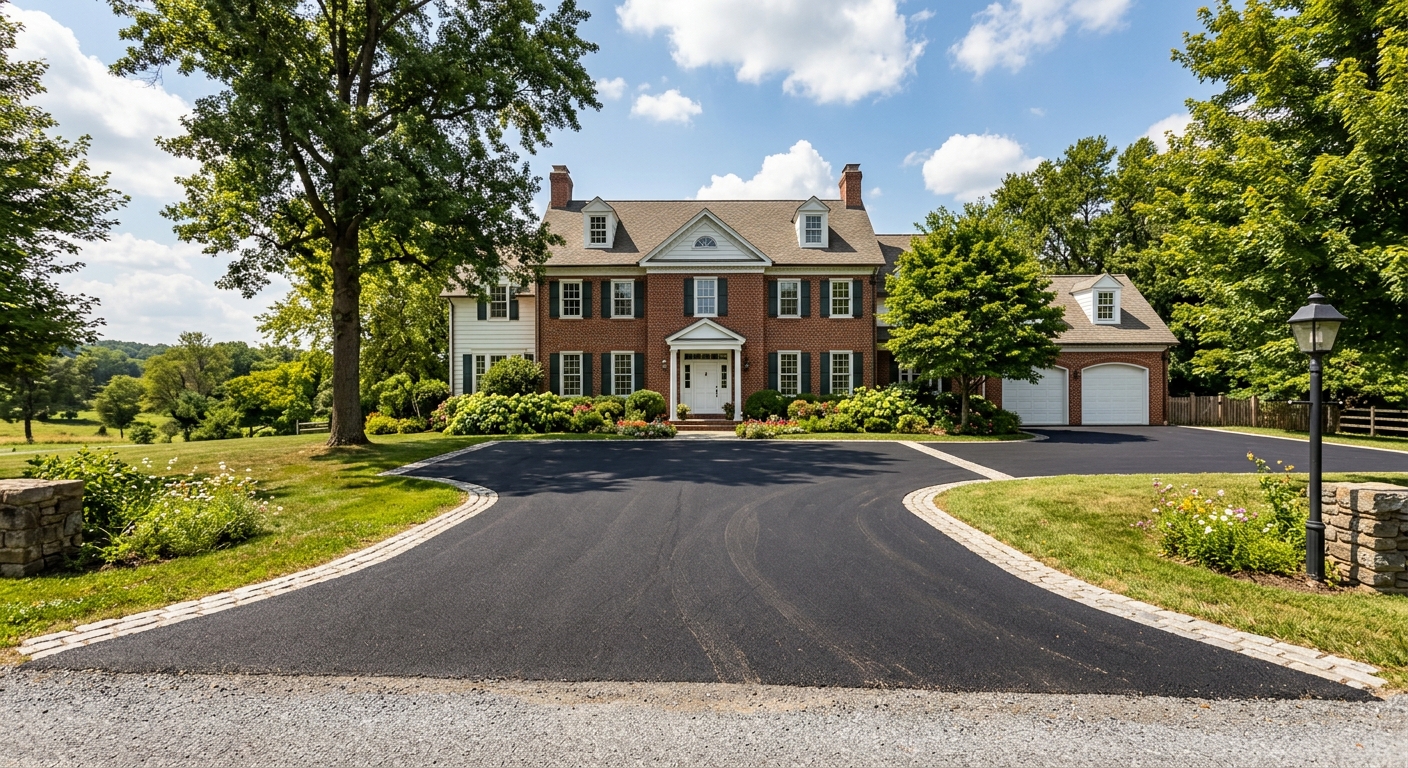
Polk paving prices by scope — 2026
In Polk, where 91.6% of homes are single-family and the homeownership rate is 83.1% (U.S. Census Bureau, ACS 2024), driveway paving is one of the largest exterior expenses most households will take on. The region’s freeze-thaw climate, marked by severe winter temperatures and deep frost penetration, puts driveways under yearly stress. Many properties sit on rocky subgrade typical of the Pocono Plateau, increasing the importance—and the cost—of proper base preparation. While the visible paving surface looks the same from contractor to contractor, most price differences in Polk aren’t about the top layer’s thickness or material. They’re buried underneath, in the unseen layers of excavation, aggregate base, drainage, and compaction. That’s where the job is made to last—or fail. If you see two quotes with a big gap, chances are the cheaper one is saving money underneath, not at the surface where you can see it.
| Service |
Best for |
Lifespan |
Price range |
| Asphalt — full replacement with new base |
failed base, structural cracking |
20–30 yrs |
$3,500–$8,900 |
| Asphalt overlay / resurfacing |
sound base, surface cracking only |
8–15 yrs |
$1,500–$4,500 |
| Sealcoating — single application |
preventive maintenance on sound asphalt |
2–4 yrs |
$200–$700 |
| Concrete — new installation |
long service life, low maintenance |
30–50 yrs |
$5,000–$12,000 |
| Crack filling and patching |
isolated cracks under a quarter inch |
1–3 yrs |
$200–$800 |
| Gravel driveway |
rural, budget, long runs |
5–10 yrs with upkeep |
$900–$3,500 |
Estimates for a typical Polk driveway. Square footage and base condition drive these figures more than material choice.
Comparing paving estimates in Polk
To compare paving estimates in Polk, start with detail—not just a bottom-line number. A good estimate will state the measured square footage, the planned depth of excavation, details about aggregate base (type and thickness), and how compaction will be achieved (usually in “lifts”—layers compacted one at a time). Look for precise language regarding the thickness and number of asphalt courses, edge treatment (how the asphalt is sealed at the borders), and drainage/grading to prevent water issues. Cleanup and restoration of disrupted lawn edges should be covered. A written warranty needs to specify what defects are actually covered; most do not cover cracking, which can disappoint if you expected otherwise. Payment schedules in Polk should reflect a modest deposit, with the balance due upon proper completion—never full cash in advance.
The most common way people overpay is by accepting a one-line quote—“driveway paving, $X”—with no specifications. If you see this, you cannot compare or protect yourself. Below is a guide for reading your estimate:
| Line item |
What to look for |
Red flag if… |
| Area |
measured square footage stated |
eyeballed or absent |
| Excavation |
depth and disposal included |
'we'll pave over it' |
| Base |
aggregate type and depth in inches |
'proper base' |
| Compaction |
method, and done in lifts |
not mentioned |
| Asphalt |
courses and compacted depth |
'3 inches' unqualified |
| Drainage |
slope and water direction stated |
silent |
| Warranty |
what is covered and what is excluded |
verbal only |
| Payment |
modest deposit, balance on completion |
full cash up front |
How to tell if the base is gone
In Polk, the difference between a quick asphalt overlay and a full replacement comes down to the condition of the base. There’s no shortcut here—get out and look. Alligator cracking (a web of interconnected cracks covering wide areas) points to a failed base. Overlaying over this with new asphalt simply traps the problem: it will break up again after a couple of cycles. Isolated, straight cracks—especially those less than 1/4 inch wide—often mean surface aging and can be sealed. Depressions and “birdbaths” signal subgrade movement, usually from freeze-thaw cycles shifting poorly prepared ground. Crumbling at the edges? The original job likely put down little or no base beyond the tire track, so the asphalt breaks away under its own weight. Potholes show water has reached and destabilized the base, leading to another cycle of breakup. Any contractor quoting overlay without checking subsurface (with a steel probe or saw cut) is either guessing or not being upfront. Overlaying over base failure is just burning money—demand testing and an explanation before signing.
| What you see |
Likely cause |
Right fix |
Cost |
| Isolated cracks under 1/4 inch |
surface aging |
crack fill and seal |
$200–$700 |
| Alligator cracking over a wide area |
base failure |
full replacement |
$3,500–$8,900 |
| Depressions holding water |
subgrade movement |
excavate and rebuild that area |
$3,500–$5,400 |
| Crumbling edges |
no edge support |
edge repair, consider curbing |
$400–$1,500 |
| Potholes |
water into the base |
full-depth patch, then assess |
$250–$900 |
| Faded but sound surface |
oxidation only |
sealcoat |
$200–$700 |
Door-knocking crews and leftover material
Polk’s rural setting makes it a target for transient paving crews—especially with driveways visible from quiet county roads, and neighbors too far away to warn each other. The most common pitches sound friendly: “We’ve got some leftover asphalt from a job up the road,” or “We can give you a discount today only.” Add in an unmarked truck, out-of-state plates, a demand for cash before work starts, or a “written” quote that lists nothing but a total. You’ll also hear offers to spray on an oil-based sealer, thin as water, for a fraction of normal sealcoating costs; these last a single rainstorm. Why do these scams persist? The work is instantly visible, but the defects—thin asphalt, no base, improper compaction—don’t show up until another snow load or two goes by. That delay lets crews disappear.
Pennsylvania’s Home Improvement Consumer Protection Act (HICPA) exists for exactly this problem. For any driveway job over $500, you have the right to a written contract and a three-business-day right to cancel—no questions asked. Never accept verbal deals or “extras” to waive your insurance deductible, as state law prohibits this. In a county as spread out as Monroe, use these protections: if the crew can’t provide written documentation or if they push for immediate cash, send them packing.
A five-minute check: verify HIC registration at hic.attorneygeneral.gov, confirm workers’ compensation at wcais.pa.gov, and do not pay before a contract is in hand. These steps block every scam in this field.
Driveway permits, approaches and stormwater rules
In most of Monroe County, including Polk, you typically do not need a building permit to resurface an existing driveway in its current footprint. This saves a call if you’re simply restoring what’s there. However, if your project affects the part where the driveway joins the public road—the approach—a permit is usually required, and this is handled differently than you might guess. For homes joining onto PA Route 611 near Stroudsburg, it’s PennDOT District 5 that issues driveway approach permits, not your township codes office. Enlarging or expanding your driveway, especially in Stroudsburg Borough, often brings a permit review, sometimes for zoning and stormwater compliance. If you add concrete or widen your entrance, expect scrutiny on where the runoff goes. Directing additional water onto a neighbor’s property can trigger liability, permit or not—a real concern with the high runoff from paved surfaces.
Finally, Polk homeowners should confirm that any contractor has a current Home Improvement Contractor (HIC) registration (check at hic.attorneygeneral.gov) and active workers’ compensation coverage (verify at wcais.pa.gov). These are your minimum legal protections under Pennsylvania rules.
Why Polk driveways fail from the bottom up
The backbone of any driveway in Polk is the assembly you never see: natural soil (subgrade), a thick, compacted aggregate base, then your asphalt or concrete surface. Polk’s glacial till soils and the region’s severe freeze-thaw cycles place unique demands on base preparation. Water in the subgrade freezes every winter, expands, and pushes the layers above it upward—frost heave. When spring comes, the ground drops back, leaving the surface cracked, rutted, or collapsed. For this reason, base depth and drainage mean more here than in warmer parts of Pennsylvania. It does not matter how thick or smooth your new asphalt looks if the soil and base beneath can’t support it through a dozen hard winters.
This is exactly where cheap quotes cut corners: skipping real excavation for proper base removal, laying new aggregate only where visible, using too little base gravel (or low-quality “bank run” instead of crushed stone), and compacting in one layer to save time. None of these shortcuts show up in week one. By year three—often the first time a big thaw hits—you’ll see cracks, dips, and edge breakup that cost more to fix than a thicker base would have cost up front.
What should you demand in writing from a Polk paving contractor? For asphalt, at least six inches of crushed stone base, compacted in two-inch lifts (layers compacted individually), with a binder course and a finish surface totaling at least three inches compacted asphalt. State the aggregate type (2A modified or approved equivalent) and specify drainage slopes to direct water away from garages and neighbors. If your quote is silent about these numbers, you’ll get what’s quickest for the crew, not what’s best for your driveway.
Why you can't pave in February
In Polk and across Monroe County, driveway paving isn’t just about finding a free weekend—it’s dictated by weather and supply. Hot-mix asphalt must be laid and compacted above a certain temperature, or it cools too quickly to bond. When local air temps routinely fall below 4 °F (the winter design level here), asphalt plants shut down for the season—typically from late November until spring. Even if you could get mix in winter, you’d end up with a porous, brittle surface destined to break up at the next thaw. Concrete has its own rules; it needs consistent above-freezing temps to cure properly, or you’ll see scaling and early cracking.
Realistically, the paving season in Polk runs from late April to October. Material supply follows plant operation, sourced from Stroudsburg and Tobyhanna—with long hauls raising prices if you schedule at the edge of the operating window. Shoulder seasons are your best shot for access to experienced crews and a slot at a fair price. In midsummer, demand peaks, and schedules fill months out. If you’re offered asphalt work between December and March in northeastern Pennsylvania, take that offer as a red flag—it means the crew isn’t getting jobs when material is in spec, or they’re using “cold patch” methods that simply don’t last.
Frequently asked questions — driveway paving in Polk
Can I cancel a paving contract I signed at my door?
Yes, you absolutely can cancel a paving contract signed at your doorstep if you live in Polk or anywhere else in Pennsylvania. The Home Improvement Consumer Protection Act (HICPA) entitles you to a three-business-day right to cancel any home improvement contract worth more than $500, especially those solicited at your home. This is designed to protect homeowners from being pressured into quick decisions by door-to-door pavers—a common local issue. If you sign but have second thoughts, deliver your written cancellation (email, mail, or hand-delivered) within that window. The contractor must honor it, refund any deposit, and cannot penalize you. Always insist on a full written contract before any payment; never let a crew start if you aren’t fully comfortable, as rural counties like Monroe attract out-of-area crews hoping for quick, unprotected sales.
Are pavers worth the cost in northeastern Pennsylvania?
While concrete pavers offer a distinctive look and excellent longevity, in Polk and Monroe County the climate creates special challenges. Pavers can shift or heave with freeze-thaw cycles unless the base is exceptionally well-prepared and compacted—critical with our 36-inch frost depth. The up-front cost is usually higher than asphalt or even concrete slab, and, at $5,000–$12,000 for concrete driveways, good paver work will exceed that. They do offer the advantage of individual repair, but improper base or drainage leads to unevenness, especially where glacial till soils hold water. Unless you’re committed to the aesthetic and maintenance, asphalt or poured concrete makes more sense for most Polk homeowners looking for lower total expense and easier snow removal. Spend the extra only if the look and rework are worth it to you.
Is gravel a cheaper option in Polk?
Gravel is almost always the lowest-cost option for installing or extending a rural driveway in Polk, with most jobs coming in between $900–$3,500, much less than new asphalt or concrete. It’s especially practical for long runs, seasonal cabins, or steep grades where drainage is tough. That said, it isn’t maintenance-free: you’ll need to replenish the top layer every few years and manage any ruts, especially after freeze-thaw cycles. Snow removal is trickier—plows tend to dig up gravel, and spring “mud season” on glacial till soils can get real. For driveways with frequent vehicle traffic or if you want minimal upkeep, asphalt or concrete still win out. But for cost alone, gravel can’t be beat in most of Monroe County.
When is the best time of year to pave in Polk?
The best time to pave in Polk is from late April through October, when air temperatures are reliably warm and material plants are open. During the region’s winter, air temps dropping to 4 °F—and plant closures—make proper asphalt or concrete work impossible and risky. Early spring and late fall are quieter, and you’re more likely to get an experienced crew for a fair price, while midsummer can be booked months out and command higher rates. Scheduling in November or later isn’t just a gamble in Monroe County—if a crew is offering full installation then, ask why they aren’t busy during the proper paving season. For a typical driveway, plan for costs between $3,500–$8,900 for asphalt; get on the calendar early in the season to lock in your spot.
What causes concrete to spall or flake in Polk?
In Polk’s climate, concrete spalls (flakes and chips at the surface) mainly when water penetrates, freezes, and expands within the slab—an effect made worse by deicing salts and the 36-inch frost depth. Improper finishing, weak mixes, and lack of air-entrainment in the concrete (tiny bubbles that allow for expansion) speed up the damage. Using cheaper concrete to save on a project costing $5,000–$12,000 rarely pays off here. Over time, repeated freeze-thaw cycles pry off the surface paste. Always insist the contractor uses a mix appropriate for northeastern Pennsylvania (ask for air-entrained, 4,000 psi minimum) and apply a quality sealer after curing to limit salt and water intrusion. Repairs are possible but can be patchy, so initial installation is your best defense.
What is the difference between crack filling and sealcoating?
Crack filling and sealcoating are often confused but do distinct jobs for Polk driveways. Crack filling is targeted: it seals individual cracks (typically under 1/4 inch wide) that have opened as the asphalt ages and flexes each winter—fixing them for $200–$700 per driveway. Sealcoating, on the other hand, is a thin liquid applied across the entire surface. It restores color, adds a sacrificial protective layer, and blocks UV and water, slowing oxidation. However, sealcoating does not fill actual cracks or fix underlying structural issues. In the local freeze-thaw cycle, addressing cracks early is the best way to keep water out and delay larger repairs; sealcoating alone is good maintenance but does not fix already existing damage.
How many freeze-thaw cycles does Polk get?
In Polk, freeze-thaw cycling is a bigger concern than mere snow accumulation. While the exact count varies year to year, northeastern Pennsylvania reliably sees dozens of cycles each season—often every time temperatures swing above and below freezing in early spring and late fall. The “40 psf” ground snow load and 36-inch frost depth confirm that driveways here need to handle these stresses. Asphalt and concrete each respond to the flex differently—older or underbuilt driveways may show cracks or shifting after just a few years. When pricing repairs or replacement (which can range from $1,500–$8,900 depending on scope), make sure any contractor understands and builds for these repetitive cycles, not just the snow on top.
Why are paving quotes in Polk so different from each other?
The biggest reason paving quotes in Polk vary so widely isn’t surface thickness or materials—it’s what’s (or isn’t) getting done underneath. Some contractors will quote you for a full base removal, new aggregate, compaction in multiple lifts, and a proper binder and top coat, which costs more up front (often $3,500–$8,900 for full asphalt replacement). Others skip steps—paving over old layers, using minimal gravel, or giving vague estimates with no specifics. This is especially common in a market where hauling aggregate in from plants near Stroudsburg or Tobyhanna adds real cost. Every detail—base depth, aggregate quality, compaction—affects both the quoted price and how many freeze-thaw cycles your driveway will survive before needing work again.
What does compaction in lifts mean?
“Compaction in lifts” means that, rather than dumping all the aggregate or asphalt in one thick layer, the base and paving are installed in thinner layers (usually 2 inches at a time), compacted separately. In Polk, where the subgrade varies from stony to soft and frost reaches down three feet, compacting each lift is vital—it drives out air pockets and ensures a dense layer that resists settling and water infiltration. If you skip this or install a thick layer all at once, the bottom stays loose, leading to future dents and cracks. Compaction in lifts is standard best practice, and should be specified in your contract for any driveway job—especially when you’re getting a new installation priced between $3,500–$8,900.