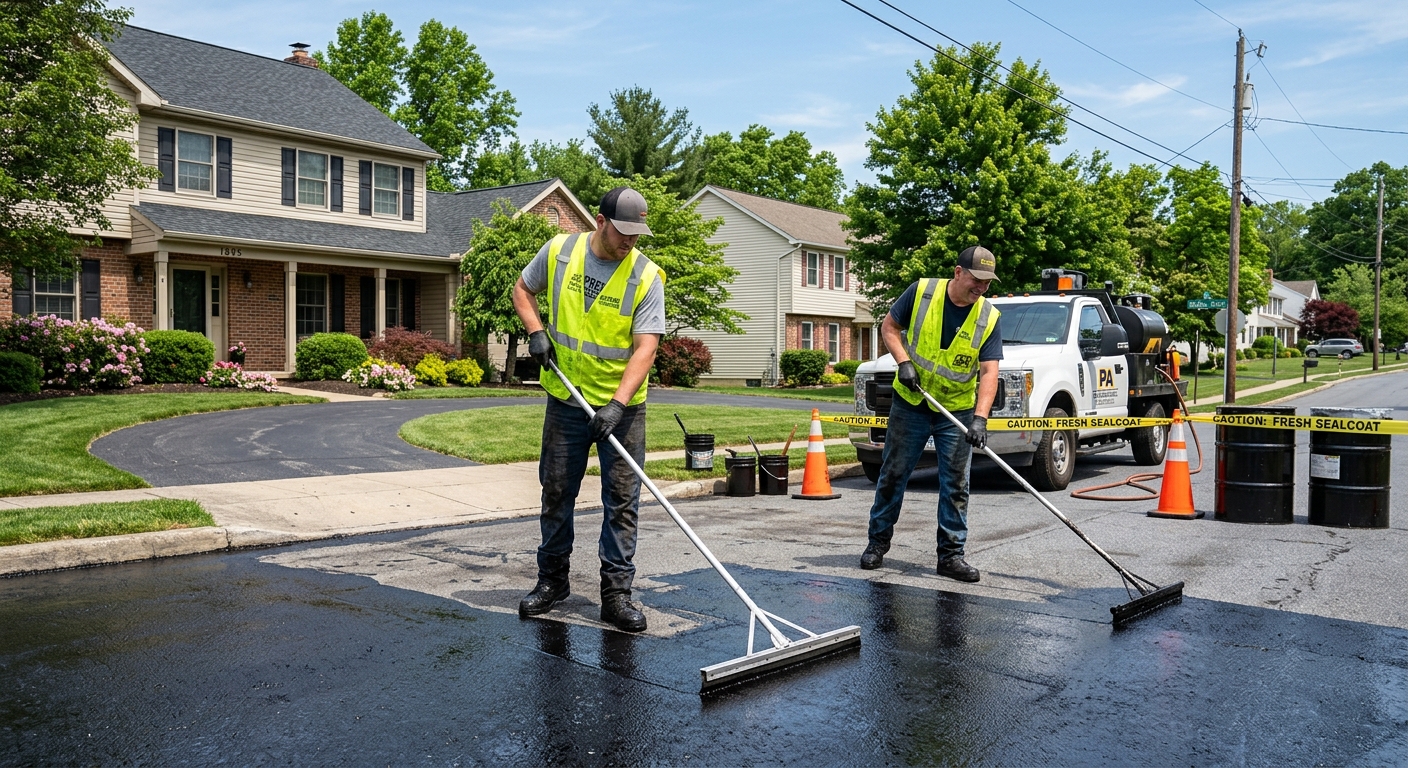
What a new driveway costs in Silver Spring
In Silver Spring, where 71.0% of homes are single-family and the homeownership rate stands at 79.2% (U.S. Census Bureau, ACS 2024), most driveways are on private property—and their condition is a clear curb appeal and usability factor. Replacing or repairing your driveway isn’t like buying a fence: in this climate, price differences are usually hiding in what’s under the surface stone, not the visible asphalt or concrete.
South-central Pennsylvania’s freeze-thaw cycles are hard on driveways, especially with the limestone karst subgrade in much of Cumberland County, which means a thicker base is crucial to stave off sinking and cracking. Homes built after 1960—common in Silver Spring—have broader driveways, so square footage really drives cost. If you see a wide gap between two paving quotes, look to what’s buried: excavation, base stone depth, and edge support out of sight, not just material type.
| Service |
Best for |
Lifespan |
Price range |
| Asphalt — full replacement with new base |
failed base, structural cracking |
20–30 yrs |
$3,900–$10,000 |
| Asphalt overlay / resurfacing |
sound base, surface cracking only |
8–15 yrs |
$1,650–$5,000 |
| Sealcoating — single application |
preventive maintenance on sound asphalt |
2–4 yrs |
$225–$750 |
| Concrete — new installation |
long service life, low maintenance |
30–50 yrs |
$5,500–$13,500 |
| Crack filling and patching |
isolated cracks under a quarter inch |
1–3 yrs |
$200–$800 |
| Gravel driveway |
rural, budget, long runs |
5–10 yrs with upkeep |
$900–$3,500 |
Estimates for a typical Silver Spring driveway. Square footage and base condition drive these figures more than material choice.
How to tell if the base is gone
The biggest decision in any Silver Spring driveway project is whether the stone base beneath your asphalt or concrete has failed. There’s no gadget for this—just careful observation. Alligator cracking (those irregular, interconnected patterns over a wide area) means the base has broken down and needs full replacement; overlaying will only hide the problem for a season or two. Linear or isolated cracks are less serious and usually relate to surface aging. Depressions or “birdbaths” suggest the subgrade (the ground below the base) has shifted, often a problem in areas with the region’s limestone subgrade. Crumbling edges happen where there’s no base support at the sides, and potholes signal water has gotten into—and weakened—the base.
If you’re quoted an overlay where there’s obvious base failure, save your money: it will not last, and a contractor who skips base probing is rolling the dice with your cash. Ask how deep the quote’s fix goes, not just what gets put on the top.
| What you see |
Likely cause |
Right fix |
Cost |
| Isolated cracks under 1/4 inch |
surface aging |
crack fill and seal |
$225–$750 |
| Alligator cracking over a wide area |
base failure |
full replacement |
$3,900–$10,000 |
| Depressions holding water |
subgrade movement |
excavate and rebuild that area |
$3,900–$6,100 |
| Crumbling edges |
no edge support |
edge repair, consider curbing |
$400–$1,500 |
| Potholes |
water into the base |
full-depth patch, then assess |
$250–$900 |
| Faded but sound surface |
oxidation only |
sealcoat |
$225–$750 |
What a real paving quote contains
In Silver Spring, the only way to compare paving quotes is to look at what’s spelled out. A real quote will state the measured square footage, how deep they’re excavating, the type and depth of aggregate base, methods of compaction, asphalt thickness (and whether the number is before or after rolling), edge treatments, grading/drainage plans, and turf restoration. The payment schedule and warranty terms matter too; most paving warranties right here exclude the cracking homeowners fear most.
A one-line bid (“Driveway paving — total $X,XXX”) is not a serious offer and is the #1 reason people pay premium prices for thin, short-lived jobs. If the quote doesn’t let you compare apples to apples, it’s easy for a company to cut corners you won’t see until the next winter's freeze-thaw exposes them.
| Line item |
What to look for |
Red flag if… |
| Area |
measured square footage stated |
eyeballed or absent |
| Excavation |
depth and disposal included |
'we'll pave over it' |
| Base |
aggregate type and depth in inches |
'proper base' |
| Compaction |
method, and done in lifts |
not mentioned |
| Asphalt |
courses and compacted depth |
'3 inches' unqualified |
| Drainage |
slope and water direction stated |
silent |
| Warranty |
what is covered and what is excluded |
verbal only |
| Payment |
modest deposit, balance on completion |
full cash up front |
Numbers, not adjectives
Every Silver Spring homeowner considering driveway work is better off insisting on specific, numerical specs in the contract—no exceptions. The phrase “We’ll put down three inches” means nothing unless it specifies whether that’s before or after compaction. True compacted thickness can be up to a third less than the loose laid amount. In this part of Pennsylvania, where the frost depth runs 30 inches and freeze-thaw cycling is pronounced, shallow or vague specs guarantee short life.
The stone base—especially on the local limestone karst subgrade—needs to be thicker and better compacted than in milder climates, or you run a real risk of movement and future sinkholes.
- Excavation depth (inches, below grass/topsoil)
- Stone base material (PA DOT 2A, CR-6, etc.) and compacted thickness
- Compaction method (plate compactor, roller size) and confirmation it’s done in lifts
- Binder course asphalt type and compacted thickness ("1.5 inches after compaction")
- Surface course asphalt type and compacted thickness
- Seam treatment between old and new material
- Edge support method (stone extension, concrete ribbon, or curb)
- Specified drainage slope (minimum 2% away from buildings)
- Restoration—topsoil/seeding along disturbed edges
- Mix designations meeting PennDOT or local standards
Changing the footprint of a Silver Spring driveway
Widening a driveway, adding a second pad, or replacing a gravel stretch with asphalt aren’t just surface projects—they all involve building a new compacted base on ground that hasn’t supported vehicles before. Expect a seam between old and new that usually cracks over the years; nothing beats starting with one uniform base, but that’s rarely justified unless the old driveway is done for.
When you expand your footprint, local stormwater and zoning rules may apply, especially when you’re close to a property line. Silver Spring Township isn’t as restrictive as some neighboring boroughs, but adding impervious surface still means paying attention to where runoff from your new asphalt goes—sending water onto a neighbor’s property is a recipe for headaches down the line.
Replacement in the existing footprint typically doesn’t need a permit in Silver Spring Township, but if you’re adding width, length, or a new connection to a state road, you’ll hit a required approval process—state routes require a Highway Occupancy Permit from PennDOT, and township roads go through the local township office.
Permits and approvals for paving in Silver Spring
For most Silver Spring homeowners, repaving or resurfacing an existing driveway can be done without a building permit—as long as you’re not expanding or changing the footprint, which matches most projects in this area. This saves you a step compared to working in Carlisle Borough, where zoning or building permits are triggered by expanding or constructing new paved surfaces. However, if your project involves connecting to a state road, you’ll need a Highway Occupancy Permit from PennDOT District 8-0; for township roads, the local township’s approval process applies instead.
Changing your driveway’s footprint by widening, lengthening, or adding a pad brings stormwater management into play: increasing impervious area can trigger runoff rules, and you may be held responsible for any new surface water directed onto neighboring properties. Always clarify drainage plans in writing.
Before you sign a contract over $500, Pennsylvania requires your contractor to be Home Improvement Contractor (HIC) registered. You can check status at hic.attorneygeneral.gov. Every paving contractor with employees must also have valid workers’ compensation coverage, verifiable through WCAIS (wcais.pa.gov). Spend five minutes checking both before any deposit leaves your hands.
The honest case for and against sealcoating
Sealcoating is everywhere in Silver Spring, with some driveways getting annual touch-ups and others left bare for a decade. Here’s what’s real: sealcoating reshields the surface from air, UV, oil, and salt, keeping the asphalt binder from oxidizing and giving a deep black finish. But it doesn’t fix base or deep surface cracks, won’t strengthen tired asphalt, and absolutely does not cure underlying subgrade issues. The idea that every driveway should be sealed yearly is a myth, largely pushed by outfits who rely on high volume—and the buildup from yearly coats can actually cause flaking and peeling.
One risk with new asphalt is sealing too soon (usually inside the first 3–6 months), which traps uncured volatiles and can soften the surface. Seal only after proper curing, and keep the interval at 2–3 years for normal residential use, not annually. Quality matters, too—thin, spray-and-go jobs for the lowest price in the paper won’t hold up, and are often little more than water and colorant. Expect to pay $225–$750 for a proper single-application sealcoat job depending on pad size.
What really matters for long-term health is crack filling. Address cracks as they appear, especially before winter so water doesn’t get in and freeze. The best sealing is clean, precise, and uses squeegees or brushes for good coverage, not just a quick spray.
Frequently asked questions — driveway paving in Silver Spring
What slope does a driveway need for drainage?
The standard for residential driveways in Silver Spring and across Pennsylvania is a minimum slope of 2% (or about 1/4 inch per foot) away from structures and toward a safe runoff point. This ensures rainwater and melting snow don’t pond or run toward your home’s foundation, which is especially critical on the limestone subgrade common in Silver Spring. On longer driveways, subtle dips or birdbaths can cause pooling and accelerate deterioration. Good quotes will specify the intended drainage slope in writing. For typical resurfacing or reconstruction, aiming for a 2% pitch meets code and keeps water moving—the foundation of long pavement life. If you’re budgeting for grading and repaving, this attention to drainage is baked into driveways in the $3,900–$10,000 range.
Does sealcoating fix cracks?
No—sealcoating does not fix cracks. In Silver Spring, where winter freeze-thaw cycling is relentless, sealing will slow further surface wear, but only a proper asphalt crack filler can seal out water and prevent cracks from expanding. Sealcoating is for renewing appearance and providing a fresh protective surface, not for structural repairs. If your driveway has cracks under a quarter inch wide, the right approach is to have these cleaned and filled with a quality hot or cold pour material, followed by a sealcoat—as a package, this usually runs $225–$750 for a typical Silver Spring driveway. Larger cracks or alligatoring means it’s time to look at deeper repairs; sealcoating over these is only cosmetic and won’t last through the next winter.
Can I pave over my existing driveway?
Sometimes, yes—if your existing driveway in Silver Spring is structurally sound, with a stable base and only minor surface cracks, an asphalt overlay or resurfacing is a valid and cost-effective option. This is common on driveways installed in the 1980s and 1990s that have aged but don’t show major base failure or alligator cracking. The cost for an overlay here typically falls in the $1,650–$5,000 range. However, if your base has failed—wide cracking, deep depressions, or recurring potholes—an overlay will only hide the problem for a short time. Only accept an overlay quote from a contractor who has probed or cored through the surface to confirm the base is sound; otherwise, you’ll spend money for a result that won’t last through our tough winters.
Do I need an approach permit where my driveway meets the road?
You almost always do. In Silver Spring, the “approach”—the apron where your driveway meets the public road—requires a permit and sometimes inspection. If your driveway connects to a state route, that means applying for a Highway Occupancy Permit through PennDOT District 8-0. For driveways connecting to township roads, it’s handled by the Silver Spring Township office. This applies even for minor rebuilds or apron repairs, not just new installations. The permit makes sure the driveway doesn’t interfere with traffic, drainage, or future road work. If you’re budgeting resurfacing or a new apron, figure that the process and fees are part of your $3,900–$10,000 or $1,650–$5,000 total, depending on scope.
Why are paving quotes in Silver Spring so different from each other?
The big price swings you’ll see in Silver Spring quotes (all the way from $1,650–$10,000 for asphalt, depending on scope) mostly come from differences in what’s happening below the surface. Many companies keep the spec vague—to make it harder for homeowners to compare and easier to skimp on stone base depth, compaction, and proper edge support. In Cumberland County’s freeze-thaw climate and limestone soils, cutting corners there can cost you the whole driveway far sooner than in a milder state. Get each quote to spell out square footage, excavation and base depth, compaction method, and asphalt thickness as compacted, not loose; this is the only way to truly compare value, not just price.
How much does a concrete driveway cost in Silver Spring?
For a new concrete driveway installation in Silver Spring, expect to pay between $5,500–$13,500, with a typical 2-car suburban install coming in around $8,800. Factors that affect cost include driveway width, total square footage, subgrade preparation (especially if you have limestone karst underneath), and any decorative finishing or reinforcement. Unlike asphalt, concrete driveways last longer—30 to 50 years with basic care—and require less regular maintenance but are costlier up front. If your old base is unstable or poorly drained, more excavation and stone depth will push the figure toward the higher end of the range.
What causes driveway cracks in Silver Spring?
Driveway cracks in Silver Spring are almost always a product of our winter freeze-thaw cycles, the underlying limestone karst (which can settle or shift), and water infiltration. Asphalt naturally oxidizes and shrinks with UV exposure, and wide temperature swings cause expansion and contraction stress. Lack of edge support can also leave cracks at the margins. In older neighborhoods or on drives built before 1980, less-thorough base preparation is a common culprit. Crack filling ($200–$800 for minor work) is essential to prevent small cracks from growing, but widespread alligator cracking indicates a failed base and calls for a more substantial solution.
When is the best time of year to pave in Silver Spring?
The best paving window in Silver Spring runs from late April through early October, when daytime highs are warm enough for proper asphalt or concrete curing and there’s less risk of freeze-thaw overnight. Cool or wet weather can prevent the mix from compacting and setting up correctly, which affects longevity. May, June, and September are usually ideal months—enough warmth, lower rainfall, and crews are fresh, not rushed. Waiting until the middle of the paving “rush” in midsummer can stretch schedules, so book ahead. Your cost falls in the same bands—$3,900–$10,000 for full asphalt replacement—even in the shoulder seasons, but rushing late or paving too early can open the door to quality issues.
Are door-to-door pavers a problem in Silver Spring?
Yes, and for good reason. Every year in Cumberland County—including Silver Spring—contractors show up with “leftover asphalt” and a story about being able to offer a cheap job today only. These are rarely registered with the Pennsylvania Home Improvement Contractor registry, and many carry no valid workers’ comp coverage. The usual pattern is a low deposit for rushed, thinned-out asphalt with no real base prep or edge work, and the “warranty” is verbal only. If you’re offered a driveway for less than $1,650–that’s below the realistic lowest band for overlay—walk away. Always check HIC registration at hic.attorneygeneral.gov and workers’ comp status at wcais.pa.gov. Quality work is worth waiting and paying the proper market price.