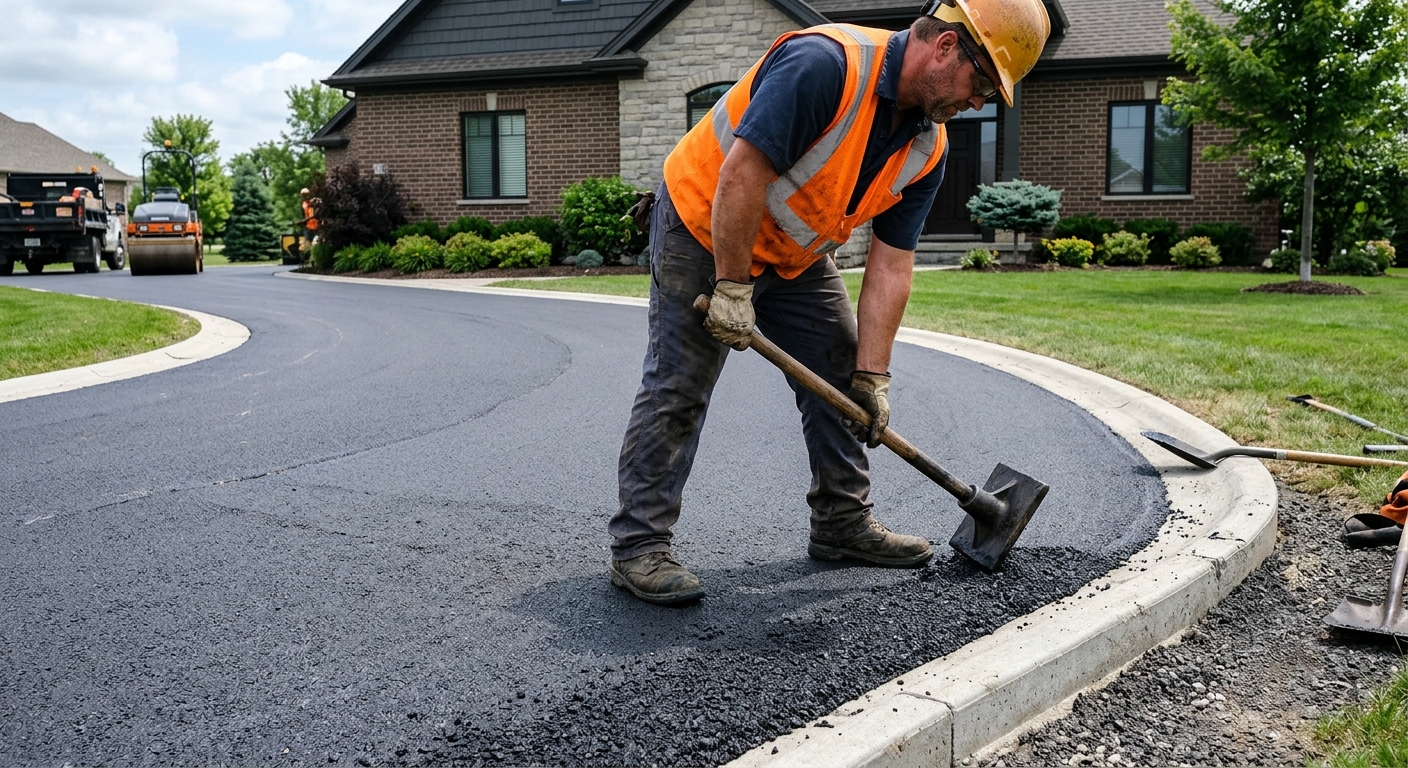
Tyrone paving prices by scope — 2026
For Tyrone homeowners, the decision to pave or replace a driveway often comes with many unknowns. With only 56.4% of homes in Tyrone being single-family and a homeownership rate of 56.2% (U.S. Census Bureau, ACS 2024), driveway paving is a project mostly for detached-home owners—which means you're making one of the costlier site investments. In Tyrone and across Blair County, driveways take a beating from cycles of freezing and thawing, and local limestone and shale subgrades near Hollidaysburg add risk for settlement if not handled correctly.
Understand: the major price difference between two quotes almost always comes down to what’s happening beneath the pavement. The critical steps—excavation, base thickness, and real compaction—disappear from view as soon as the asphalt is down. That’s why two competing prices can differ by thousands of dollars despite both promising a “new driveway.” The table below gives real 2026 ranges for Tyrone, where square footage and base condition matter even more than the choice of material.
| Service |
Best for |
Lifespan |
Price range |
| Asphalt — full replacement with new base |
failed base, structural cracking |
20–30 yrs |
$3,100–$8,100 |
| Asphalt overlay / resurfacing |
sound base, surface cracking only |
8–15 yrs |
$1,350–$4,000 |
| Sealcoating — single application |
preventive maintenance on sound asphalt |
2–4 yrs |
$175–$650 |
| Concrete — new installation |
long service life, low maintenance |
30–50 yrs |
$4,500–$10,500 |
| Crack filling and patching |
isolated cracks under a quarter inch |
1–3 yrs |
$200–$800 |
| Gravel driveway |
rural, budget, long runs |
5–10 yrs with upkeep |
$900–$3,500 |
Estimates for a typical Tyrone driveway. Square footage and base condition drive these figures more than material choice.
The paving season in north-central Pennsylvania
In Tyrone and the rest of Blair County, paving is a truly seasonal business—there’s simply no getting around our climate. The average winter design temperature bottoms out at 2 °F, and snow load here is among the highest in Pennsylvania, leading to a long, hard freeze that shapes every part of the paving schedule. For asphalt, the material must be hot and pliable when placed and compacted; if air or ground temperatures fall too low, you end up with a driveway that’s weak and riddled with air pockets within months.
Asphalt plants in the Altoona and Duncansville area close when the daily lows dip, making the material itself unavailable for part of the year. Concrete isn’t immune either—fresh concrete can’t cure correctly in freezing weather, or the surface will flake and spall. This means local paving crews have a hard cutoff: real work typically runs April through early November, sometimes starting a little earlier or finishing a bit later if we get a stretch of mild weather. Crews book up solid by mid-summer, with prices often reflecting this squeeze.
If a company offers to pave in December or promises a spot-job during a frosty cold snap, be skeptical—to stick to that promise, they’d either have to cut corners or risk the whole job. The shoulder seasons—early spring and late fall—are when you might find better crew availability, but even then, above-freezing weather is non-negotiable. The local aggregate plants and asphalt suppliers know these windows well, so schedule your paving accordingly to get both a fair price and a job that lasts.
Permits and approvals for paving in Tyrone
Most Tyrone homeowners can replace or resurface their driveway in its existing footprint without a full building permit—this saves time, paperwork, and sometimes a permit fee. That said, anytime you alter your driveway’s width, alignment, or especially its connection to a public street, you’re near-certain to face an “approach permit.” For driveways joining U.S. 220 near Hollidaysburg, approach permits come from PennDOT District 9, while local boroughs handle approaches on local streets. Always check before digging or you could face major delays.
Stormwater is the next thing to watch. Expanding your driveway—even by a few feet—adds impervious surface, which can trigger runoff or stormwater management requirements in Blair County’s municipalities. Regardless of the permit, you are liable if water runs off your new driveway onto a neighbor’s property and causes damage. Planning drainage correctly from the start avoids both headaches and disputes.
For legal compliance in Pennsylvania, any paving job over $500 requires a written contract under the Home Improvement Consumer Protection Act. You must hire a contractor with valid Home Improvement Contractor (HIC) registration, verifiable at hic.attorneygeneral.gov. All workers must be covered by workers’ compensation—ask for coverage and verify at WCAIS (wcais.pa.gov). Scrutinizing this paperwork is not optional; the state enforces these requirements to protect homeowners from fraud and uninsured liabilities.
Getting thirty years out of a driveway
Extending the life of your Tyrone driveway is about doing small things right and doing them early. First—and most important—is crack filling before water can reach and weaken the base; a $200–$800 patch job is far cheaper than a full replacement. Keeping the edges supported with soil or stone prevents crumble from tire loads. Always keep water moving away from your driveway; standing water shortens both asphalt and concrete life dramatically, especially in northern Pennsylvania’s heavy freeze-thaw environment.
Be patient with fresh pavement. On new asphalt, wait at least 5–7 days before parking, and avoid sharp turns in place for the first month. Heavy loads—like a dumpster or construction delivery—can cause ruts or cracks even in new driveways, so protect the surface or wait until it’s fully cured.
For de-icing, salt will chew up a concrete driveway in Blair County’s winter; sand or a calcium chloride product is safer. Asphalt holds up better, but rapid freeze–thaw from salted snow piles creates stress and can cause early cracking. These alternatives cost more up front but save repairs later.
Beyond replacement: layout changes
If you’re thinking about more than just a replacement—like widening your driveway for another vehicle, extending it to a detached garage, or converting a gravel drive to asphalt—the project changes in important ways. Any time you enlarge or change the driveway footprint, you’re building over soil that’s never been compacted for vehicle loads. That means a completely new aggregate base must be installed, and the joint where old and new meet will always be more likely to crack.
Tyrone homeowners also face local rules on setbacks and impervious surfaces: you can’t pave right to your property line, and adding surface area can trigger runoff management requirements. Stormwater planning isn’t just paperwork—it protects you from liability if your runoff damages a neighbor’s property.
Finally, approach permits come into play: even small changes where your driveway meets a public road may require local or even PennDOT approval, especially in the Hollidaysburg and U.S. 220 corridor. Plan ahead, budget for excavation of undisturbed ground, and expect some permit costs if you change your driveway’s size or shape.
Choosing a paving company
Hiring the right paving contractor in Tyrone is as much about what you confirm as who you like. Pennsylvania requires a Home Improvement Contractor (HIC) registration—always check it at hic.attorneygeneral.gov. Workers' compensation coverage is also mandatory, verifiable through WCAIS (wcais.pa.gov). Anyone unwilling to show their clearance is not worth considering for your Blair County property.
Get references from jobs at least three years old—fresh work tells you nothing about durability. Ask about their local business address (not just a cell or PO box), and whether they own or always rent equipment. In Blair County, most legitimate contractors can name their preferred asphalt or aggregate plant near Altoona or Duncansville. If they “shop around” or won’t commit, they’re likely reselling work or just brokering jobs.
- Verify HIC registration at hic.attorneygeneral.gov
- Check workers’ compensation at WCAIS (wcais.pa.gov)
- Ask for proof of local business address
- Get references from jobs over three years old
- Confirm ownership (not rental) of primary equipment
- Require written estimates specifying base depth
- Ask which Altoona/Duncansville plant supplies their asphalt or stone
- Check for ability to explain subgrade issues in Blair County (limestone, shale)
- Insist on a clear site contract—including stormwater handling
- Look for insurance beyond just workers’ comp
- Research BBB or local complaint history
- Visit a past local job, if possible
Red flags: out-of-state tags on trucks, pressure for cash payment, refusal to specify aggregate depth or source, and an inability to provide documentation from the Pennsylvania contractors’ registry or insurance carrier. With paving, what is under the surface is what you are truly buying—push for transparency at every step.
What's under the asphalt matters more than the asphalt
The single biggest decider of how long your Tyrone driveway will last is how the base is built—not the thickness of the asphalt alone. Start at the bottom: the natural subgrade in Blair County is often limestone and shale, especially near Hollidaysburg. This is good for drainage when treated right, but if it's loose or wet, it creates headaches. Over that, a compacted aggregate base (crushed stone, #2A modified or similar) distributes weight and delivers stiffness. Only then comes the hot-mix asphalt, with each layer designed to spread vehicle loads smoothly downward.
In a climate with a 36-inch frost depth and severe freeze-thaw like northern Blair County, frost heave is the enemy. Water trapped in the subgrade or base freezes and expands, pushing the pavement up unevenly and breaking it from below. Once the surface cracks, more water enters, accelerating failure. That's why a thin base or poorly compacted stone will doom any driveway here, no matter how thick the top coat.
This is exactly where the lowest bid usually cuts corners. Skipping excavation, putting fresh asphalt over a failing or soft base, using too little or the wrong kind of aggregate, or compacting the stone and asphalt too quickly (or not at all). None of these shortcuts are visible when the crew leaves. But come the third or fourth winter, the symptoms will show—cracking, low spots, and edge breakdown.
Insist—in writing—on at least 6–8 inches of compacted aggregate base for new or expanded driveways, using #2A crushed stone or a similar local standard. Require that both the base and the asphalt are compacted in proper lifts (layers), and ask for the crew chief to sign off on compaction testing. These steps should be spelled out in your contract, not taken on trust. In Tyrone, it’s not the size of the equipment or the speed of the crew, but how well the foundation is actually built beneath that determines if your new pavement lasts twenty years or crumbles in eight.
Frequently asked questions — driveway paving in Tyrone
How long before I can drive on a new asphalt driveway?
For a Tyrone homeowner, waiting a bit after your new asphalt is laid is critical to long life. In Blair County’s variable spring and fall conditions, you should aim for a minimum of 5–7 days before parking a vehicle on fresh asphalt. For the first month, avoid stationary turning of wheels—a common habit that can “scuff” and prematurely age the surface. Full curing, where the asphalt reaches its maximum hardness, may take up to 60–90 days, especially in our cooler local climate. During this time, be gentle with heavy loads, avoid placing dumpsters, and don’t park trailers with jacks or tongue weights directly on the surface. Cutting this corner can lead to permanent depressions and earlier cracking, requiring repairs in the $200–$800 range sooner than you’d like.
What does sealcoating cost in Tyrone?
Sealcoating costs in Tyrone run $175–$650 for a single application on a standard-size driveway, with most homeowners spending around $350. The actual price depends on the size, the number of cracks to fill ahead of sealing, and whether cleaning or edge trimming is needed first. Sealcoating is a good maintenance move on sound asphalt but won’t cure significant base or structural problems. In Blair County’s freeze-thaw climate, a fresh coat every 2–4 years can postpone replacement. Some quote games are played with “per-gallon” or “per-square-foot” rates, but a written price for your full driveway is the only figure that counts.
How much does driveway paving cost in Tyrone?
For Tyrone single-family homes, a full asphalt driveway replacement with a new base usually falls in the $3,100–$8,100 range, with most jobs around $4,900 for typical sizes and conditions. Asphalt resurfacing or overlay—if your base is still good—can cost less, typically $1,350–$4,000. Concrete driveways are more, at $4,500–$10,500 depending on size and site conditions. The biggest driver of cost is not always material: it comes down to the amount of base excavation, compaction, and the haul distance for good aggregate. Quotes that look too good to be true usually short-cut the foundation, not the visible surface.
How deep should the aggregate base be here?
In Tyrone and the rest of Blair County, with a 36-inch frost depth and soils often made up of limestone and shale, you need an aggregate base of 6–8 inches for a standard residential driveway bearing cars and SUVs. If you’re paving over new ground, adding a second entrance, or need heavy-truck access, pushing toward the 8-inch side is smart. Too thin a base means frost heaves, rutting, and cracking will show up long before you hit the expected 20–30 year lifespan of an asphalt driveway. Skimp on this, and you could face a full replacement at the $3,100–$8,100 end of the scale within a decade.
Are there stormwater rules on paving in Tyrone?
Yes—while individual Blair County municipalities set their own details, expanding or constructing a new driveway in Tyrone may trigger local stormwater requirements. Adding impervious surface (which a paved driveway does) affects runoff, and local ordinances may require you to manage where water goes—especially if you increase the size or change the slope. Even without permits, homeowners are liable if altered drainage causes issues for neighbors. Planning drainage right upfront has real value; failure could lead to rework or legal trouble costing more than the initial $3,100–$8,100 paving investment.
What causes concrete to spall or flake in Tyrone?
Concrete driveways in Tyrone face harsh freeze-thaw cycles and frequent de-icing, both tough on cement. Spalling or flaking most often results from water entering the concrete, freezing, and expanding (a real issue here), or from poor finishing and early troweling that weakens the surface layer. Road salt exacerbates the problem by chemically attacking the surface. Choosing air-entrained concrete and minimizing salt use can help; but repair costs can reach into the $200–$800 band if caught early—or require full replacement if ignored.
Does sealcoating fix cracks?
No—sealcoating does not fix cracks. In Tyrone, sealcoating is applied as a thin, protective surface layer to slow weathering and UV damage, not to address active cracking. It will help prevent new, fine cracks for a few seasons, but existing cracks—especially anything wider than a hairline—need to be cleaned and filled prior to sealing. Ignoring cracks under the sealcoat allows water to penetrate the base, which brings down the lifespan of your driveway and can speed replacement in the $3,100–$8,100 band.
How many freeze-thaw cycles does Tyrone get?
While the exact count varies each year, Tyrone typically endures dozens of freeze-thaw cycles in a season, with winter design temperatures dropping to 2 °F and some of the highest snow loads statewide. Each freeze-thaw expands any trapped water beneath your pavement, putting it at risk for cracks and heaving—especially if the base wasn’t properly constructed. A driveway built to local standards, with a strong aggregate base, withstands these cycles much better and avoids early repairs in the $200–$800 range.
Should I repair or replace my Tyrone driveway?
In Tyrone, repair makes sense when cracks are limited (less than 1/4 inch wide and not running throughout) and the surface distress is shallow. Crack filling and patching at $200–$800 can buy time if the base is still solid. Replacement—at $3,100–$8,100—is warranted when you see widespread alligator cracking, severe settlement, or water pooling that won’t correct with patching. Because so many Tyrone homes were built before 1980, many driveways have bottoms as old as the houses themselves, so sometimes starting fresh with a full-depth replacement is the wise investment.